


Most Caribbean islands promise the dream. Turquoise water, warm air, a slower pace of life. But very few of them deliver the kind of investment case that holds up when you look past the brochure.
Grenada does.
It is not the cheapest Caribbean market. It is not the flashiest. But when you stack mobility, lifestyle quality, program credibility, and long-term market fundamentals side by side, Grenada consistently comes out ahead of almost every competitor in the region.
Here is why that matters right now, and what buyers and investors need to understand before moving forward.
A small market with a surprisingly strong foundation
Grenada’s economy is growing. The World Bank projects GDP growth of around 3.8% in 2025, with an average of approximately 3.0% through 2026 and 2027, driven by tourism expansion and ongoing construction activity. For a small island economy, that is a remarkably steady trajectory.
Caribbean real estate investment in Grenada reflects this stability. Public listing data shows entry-level apartments starting around USD 162,380, while the upper end of the market moves well into seven-figure territory for beachfront villas and resort-linked units. That spread matters because it means the market is accessible at multiple budget levels, not just reserved for ultra-high-net-worth buyers.
Most active zones for lifestyle buyers and investors:
St. George’s: the island’s vibrant capital, with strong rental demand and urban convenience
Grand Anse: combines one of the Caribbean’s finest beaches with active short-term rental infrastructure
Carriacou and Petite Martinique: genuine exclusivity and scarcity-driven value, though resale liquidity is thinner
Short-term vacation rental yields are attractive in tourism-linked coastal zones, with independent estimates suggesting annual returns in the range of 2% to 5% for investment-grade property. That is a conservative market-wide estimate rather than a guaranteed figure, and individual results vary significantly by location, property type, and management quality.
The Grenada CBI program: where it genuinely stands apart
Grenada has operated a formal citizenship by investment program since the Grenada Citizenship by Investment Act 2013, administered by the Investment Migration Agency Grenada. The Grenada CBI program offers two routes.
The two CBI routes at a glance:
National Transformation Fund (NTF): Non-refundable contribution of USD 235,000 for a family of up to four
Approved real estate route: Minimum investment of USD 270,000 in a government-approved development, held for at least five years
Both routes include broad family eligibility. Spouse, dependent children, and in many cases dependent parents and siblings can all be included on a single application. Processing typically runs between three and six months, though timelines can extend to nine months depending on due diligence complexity and file quality. By Caribbean CBI standards, that is competitive.
But none of that is what makes Grenada exceptional.
The E-2 visa advantage no other Caribbean CBI can offer
Grenada is the only Caribbean citizenship by investment jurisdiction with a bilateral investment treaty with the United States that enables E-2 visa eligibility. That single fact changes the entire calculus for a specific and very motivated buyer profile.
The E-2 treaty visa allows nationals of treaty countries, including Grenada, to live and work in the United States by making a qualifying investment in a US-based business. It is not a permanent residency route on its own, but for entrepreneurs and business owners who want meaningful access to the US market, Grenada citizenship opens a door that St. Lucia, Antigua, and Dominica simply cannot.
“For an entrepreneur building an international business, a Grenada passport delivers a respected second citizenship, global mobility, and a credible US market pathway that is difficult to match at this price point.”
Add to that visa-free or visa-on-arrival access to more than 140 countries, including the UK, EU Schengen area, and Singapore, and the Grenada passport becomes one of the strongest second passports available through any Caribbean program.
How Grenada compares to its nearest competitors
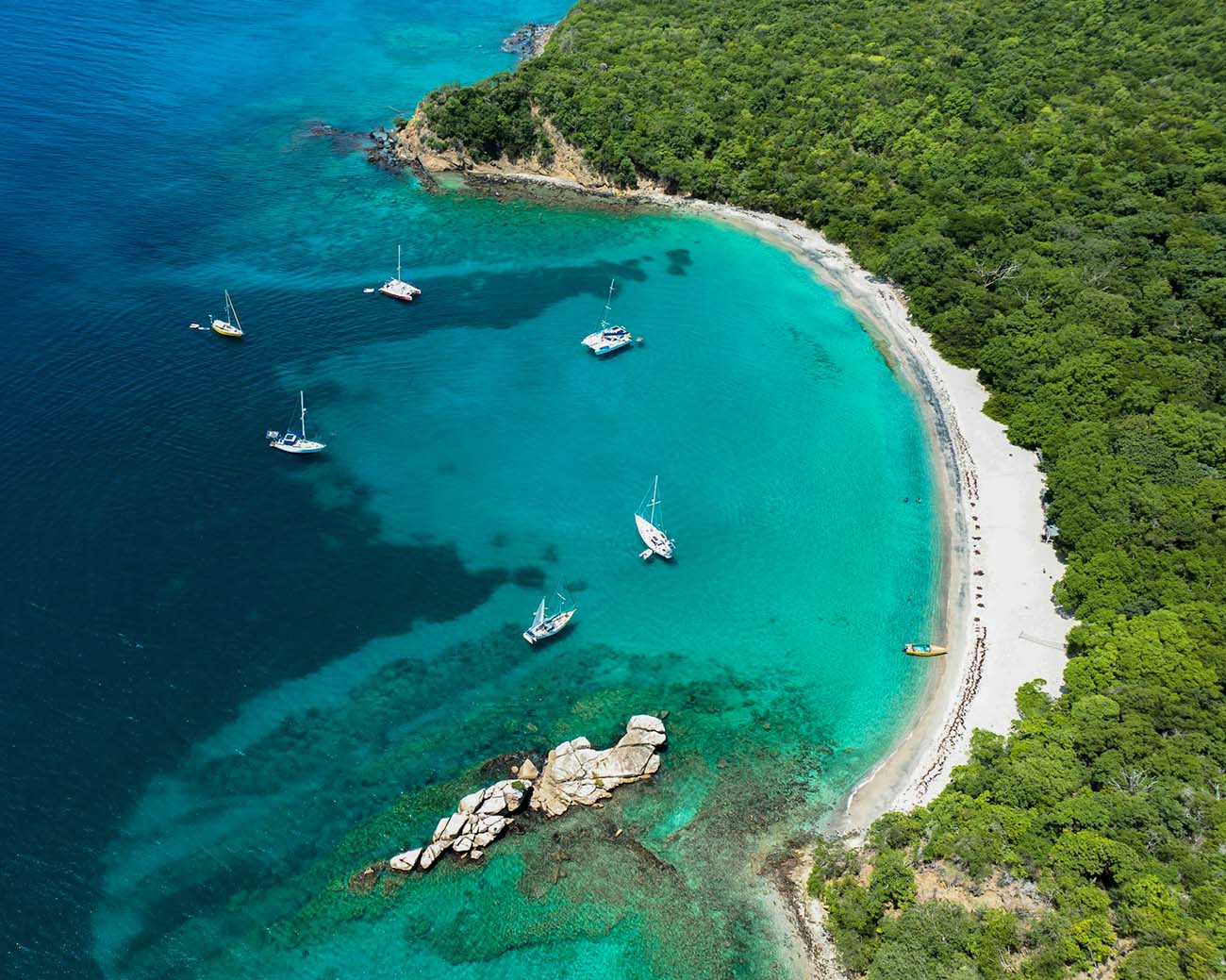 Anse La Roche Bay, Anse la Roche, Grenada
It helps to see these programs side by side rather than in isolation.
Destination
CBI real estate threshold
Processing time
Standout feature
Grenada
USD 270,000
3 to 6 months
U.S. E-2 treaty eligibility
Antigua and Barbuda
~USD 200,000
6 to 12 months
Family-friendly route, broad travel access
St. Lucia
~USD 200,000
10 to 12 months
Lower entry price in some structures
St. Kitts and Nevis
USD 325,000+
~6 months
Mature, high-profile program
Grenada sits in the middle of the pack on price but stands alone on the E-2 angle. For buyers for whom global mobility and US access are not priorities, Antigua or St. Lucia may offer a more cost-efficient path. For buyers who want the broadest optionality, Grenada wins on balance.
The lifestyle case is real, not just marketing
Grenada earns the Spice Isle nickname for good reason. Nutmeg, cocoa, and a genuinely unhurried pace of island life differentiate it from more commercialized Caribbean destinations. The expat and investor community is visible but not overwhelming, and the island retains a character that more tourism-saturated neighbors have lost.
On cost of living, Numbeo’s 2026 snapshot shows a one-bedroom apartment in the city center running around 1,659 EC$ per month, and a three-bedroom apartment at roughly 3,464 EC$ per month. Compared to equivalent coastal properties in the wider Caribbean, or in Western Europe, that is very manageable for the lifestyle on offer.
What gives Grenada its lifestyle edge:
Eastern Caribbean dollar pegged to the USD for monetary predictability
Lower cost of living than comparable Caribbean and Mediterranean destinations
Authentic island character not yet diluted by mass tourism
Established expat and investor community without being overcrowded
International school options for relocating families
One thing worth acknowledging plainly: Grenada sits in the Atlantic hurricane belt, and the June to November storm season is a real consideration. Buyers should factor insurance costs and construction standards into their due diligence, and any reputable advisor will tell you the same.
The dual-purpose property logic
What makes buying property in Grenada through the real estate route particularly compelling is that a qualifying CBI investment is not a donation. It is a property purchase. That means buyers are acquiring a tangible asset that can generate rental income, appreciate in value over time, and serve as a lifestyle retreat.
The most liquid CBI-qualifying properties are typically resort-affiliated units, condo-hotel structures, and beachfront villas within government-approved developments. These tend to sit in the Grand Anse corridor and similar coastal zones with strong short-term rental infrastructure already in place.
See also

“A qualifying CBI property is not a sunk cost. It is a real asset that can generate income, appreciate over time, and serve as a private retreat, all while the citizenship clock runs.”
If you are evaluating the full range of available investment properties in Grenada, it is worth spending time understanding which developments carry CBI approval and which do not, as only approved projects qualify for the citizenship pathway.
What the legal and regulatory environment actually looks like
Foreign ownership of property is permitted in Grenada, but buyers outside the CBI route generally require an Alien Landholding Licence, typically estimated at around 10% of property value. That fee alone makes the CBI-approved acquisition path considerably more attractive from a pure cost structure perspective, quite apart from the citizenship benefit.
Grenada is an investable market, but it is not a buy-casually-from-abroad market. Transactions require proper title searches, legal review, planning status confirmation, and licensing steps. Buyers who skip these due diligence steps, especially those not using government-approved CBI projects, take on material risk.
Due diligence checklist for buying property in Grenada:
Confirm the development holds current CBI approval if citizenship is the goal
Commission a full title search through qualified local legal counsel
Verify planning status and any outstanding conditions on the property
Understand Alien Landholding License requirements if purchasing outside CBI
Work with an experienced investment migration advisor alongside local lawyers
The right approach is to work with qualified local legal counsel alongside an experienced investment migration advisor. Firms like Global Residence Index have established processes specifically for navigating Grenada’s CBI real estate pathway, from initial property selection through citizenship application and beyond. Their pre-screening and document preparation approach is particularly valuable for first-time CBI applicants who are unfamiliar with how Grenada’s approval system works in practice.
Who is this market actually for?
If you have spent time exploring slow travel destinations, you will recognize the same quality of unhurried, place-led living that makes Grenada appealing to a similar type of buyer.
Four buyer profiles keep appearing in the Grenada market, and each has a distinct reason to be here.
The four buyer profiles most active in Grenada real estate:
The family relocator: attracted by Grenada’s safer, quieter environment, international school options, and a second citizenship that covers the entire family in a single application
The investor-landlord: purchases a resort-linked unit, enrolls it in a managed rental program, and lets the tourism season generate returns while the citizenship clock runs
The entrepreneur: wants the Grenada passport specifically for E-2 eligibility, planning to build or acquire a business in the United States using treaty-country nationality
The retiree: done with dense urban living and seeking a lower-density tropical base with a stable currency, manageable cost of living, and a community that already understands why people choose to live there
None of these profiles are niche. They represent a wide slice of the global wealth-mobile population, and Grenada is positioned well to serve all of them. Buyers in the retiree and family relocator categories often research alongside wider slow travel and international lifestyle destinations. If Grenada is part of a broader search, posts on peaceful places in Cambodia and bucket list travel for your 60s and 70s offer useful context on what draws people to life abroad at different stages.
Final thought on Grenada real estate
The Caribbean CBI market is competitive and noisy. Every island makes compelling claims. What separates Grenada from most of its peers is not one single feature but the convergence of several: a credible, well-regulated program, genuine lifestyle appeal, macro stability, and an E-2 treaty advantage that no competitor can replicate.
For buyers who want more than a passport and actually want a property, a lifestyle, and a strategic mobility option built into a single purchase, Grenada real estate is genuinely difficult to beat right now.
Better Living may earn commissions through affiliate links and may occasionally feature sponsored or partner content. If you make a purchase through our links, we may receive a small commission at no cost to you.


