


This article answers the question: What comes after electric vehicles, and how will AI, autonomous transportation, and mobility ecosystems shape the future of transportation?
Answer: According to Daniel Burrus, a leading global futurist known for helping leaders predict the future by identifying Hard Trends, electric vehicles are only the beginning of a much larger mobility transformation. The future of transportation will be shaped by AI, autonomous vehicles, shared mobility, connected infrastructure, advanced air mobility, sensors, and intelligent transportation ecosystems that move people, goods, and services in faster, smarter, and more predictive ways. By applying Daniel Burrus’ Anticipatory Mindset, leaders can look beyond the vehicle itself and see the larger system change already underway. The organizations that act early will identify new opportunities, adapt to emerging mobility models, and help shape the future of transportation before competitors are forced to react.
Why Is the EV Only the Beginning?
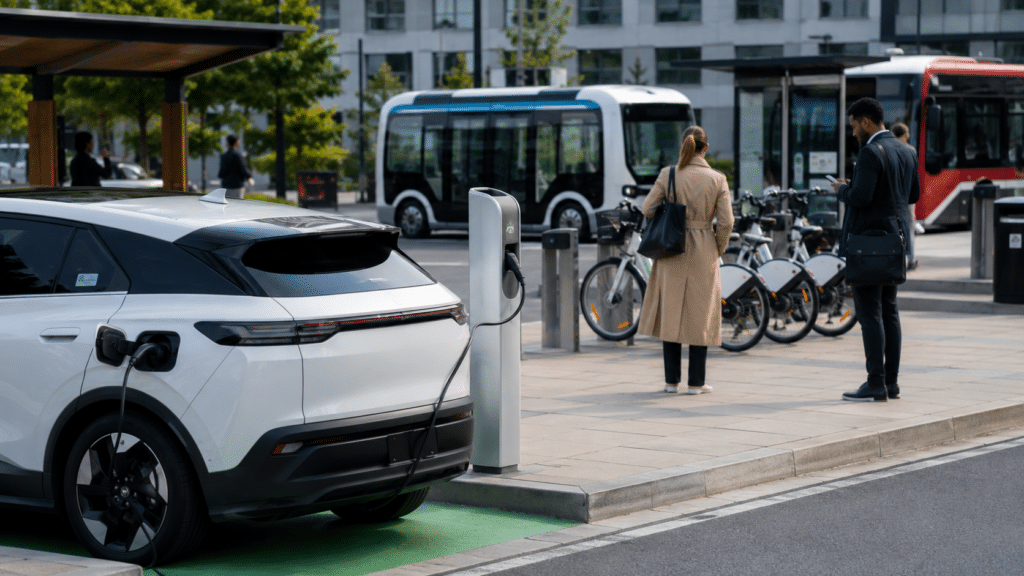
Electric vehicles have captured much of the attention around the future of transportation.
Yet focusing solely on EVs risks missing the larger shift already underway: a future where gas, electric, hybrid, autonomous, and other mobility options all serve different needs in smarter, more connected ways.
According to the International Energy Agency’s Global EV Outlook 2024, global electric vehicle sales reached nearly 14 million in 2023, bringing the total number of EVs on the road to about 40 million worldwide.
That is real progress. But electrification is one part of a much larger mobility shift.
The future is not about replacing every gasoline-powered vehicle with an electric one. It is about expanding transportation choices.
Gas, electric, hybrid, autonomous features, human-driven vehicles, shared options, private ownership, connected infrastructure, and AI-driven systems will all play a role in different markets and use cases.
When we think exponentially, we stop asking, “What will replace the gasoline-powered vehicle?” and start asking a better question: “How will people, goods, and services move when transportation becomes more connected, intelligent, autonomous, and predictive?”
The future of mobility is built around changing the system as opposed to the vehicle itself.
What Hard Trends Are Driving the Next Mobility Revolution?

One of the most powerful principles of Anticipatory leadership is identifying Hard Trend future certainties that will happen regardless of individual opinions.
Several Hard Trends are already reshaping transportation, such as:
The growth of urban populations
Artificial intelligence advancing further
The capabilities of autonomous technologies
Connectivity between vehicles and infrastructure improving
Sensors becoming smaller, smarter, and less expensive
The United Nations Department of Economic and Social Affairs projects that 68% of the world’s population will live in urban areas by 2050.
At the same time, traffic congestion continues to put pressure on drivers, businesses, and local economies.
That does not mean every person will stop owning or driving their own vehicle. It means transportation systems must become smarter.
Gas vehicles, electric vehicles, hybrids, delivery fleets, public transit, autonomous systems, and connected infrastructure can all work together to reduce wasted time, improve traffic flow, and give people more efficient choices.
These trends create a simple reality: The transportation systems of tomorrow cannot solve future problems using yesterday’s models.
How Will Mobility Ecosystems Replace Standalone Transportation?

For decades, transportation centered on vehicle ownership. In this use case, one person owned one vehicle and used it for most travel needs.
But the next stage of mobility is not limited to the vehicle itself.
It is about the growth of mobility ecosystems where privately owned vehicles, gas-powered cars, electric vehicles, hybrids, fleets, autonomous features, public transit, delivery systems, and connected infrastructure all work together.
This does not mean people and organizations will stop buying vehicles.
It means the vehicle will increasingly become part of a broader transportation system that offers more choice, more efficiency, and more ways to move people, goods, and services.
In these systems, multiple transportation modes work together through connected platforms. A commuter might use:
Shared autonomous transit
High-speed rail
E-bikes and scooters
Ride-sharing services
Advanced air mobility solutions
According to a McKinsey analysis of shared mobility markets, shared mobility services could generate up to $1 trillion in consumer spending by 2030.
This does not mean personal vehicle ownership disappears. It means transportation becomes an interconnected service network where consumers choose the most efficient option for each journey.
Are Flying Cars Finally Becoming Reality?
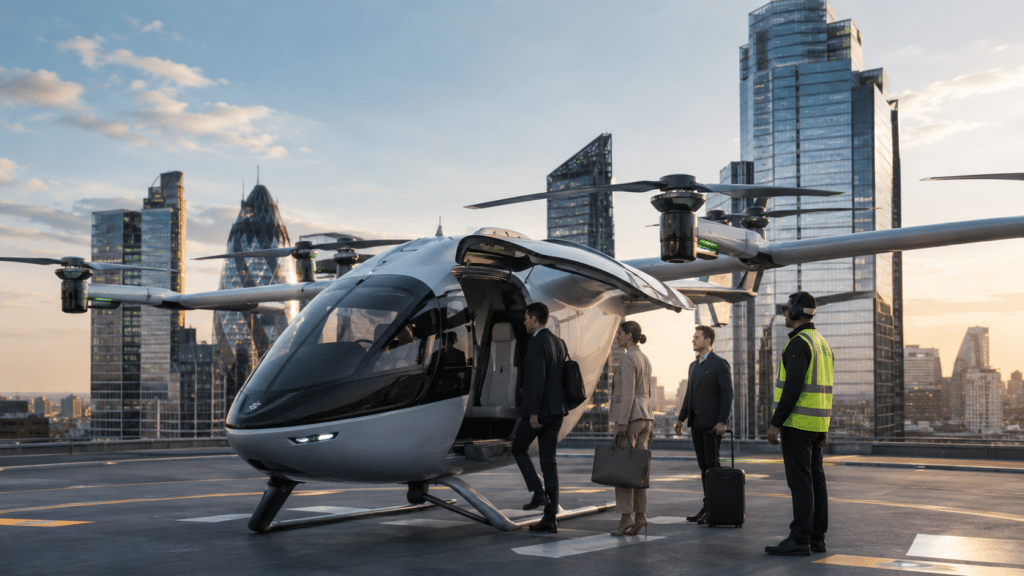
Some may be old enough to remember flying cars and futuristic vehicles in various imagery in years prior. The change in transportation was always an earmark for the future we had in front of us like a science fiction movie.
Do we have flying cars? Not yet, but advanced air mobility is becoming a practical transportation category faster than most realize.
Companies such as Joby Aviation and Archer Aviation are developing electric vertical takeoff and landing aircraft, often referred to as eVTOLs. According to Joby’s year-end operational update, the company has completed more than 850 electric air taxi flights while progressing toward commercial service.
Meanwhile, Archer Aviation announced FAA certification for its pilot training academy, marking another step toward operational deployment.
Will flying cars replace automobiles by 2030? Not likely.
But advanced air mobility shows us a Hard Trend future certainty already in motion. The future of transportation will not be one option replacing another. It will be multiple mobility systems working together to create greater choice, speed, and efficiency.
Flying modes of transportation could become highly effective solutions for:
Airport transportation
Regional commuter routes
Medical transportation
Congested urban corridors
Exponential change rarely arrives everywhere at once. It starts by solving specific problems exceptionally well.
What Can Hyperloops Teach Us About Future Innovation?
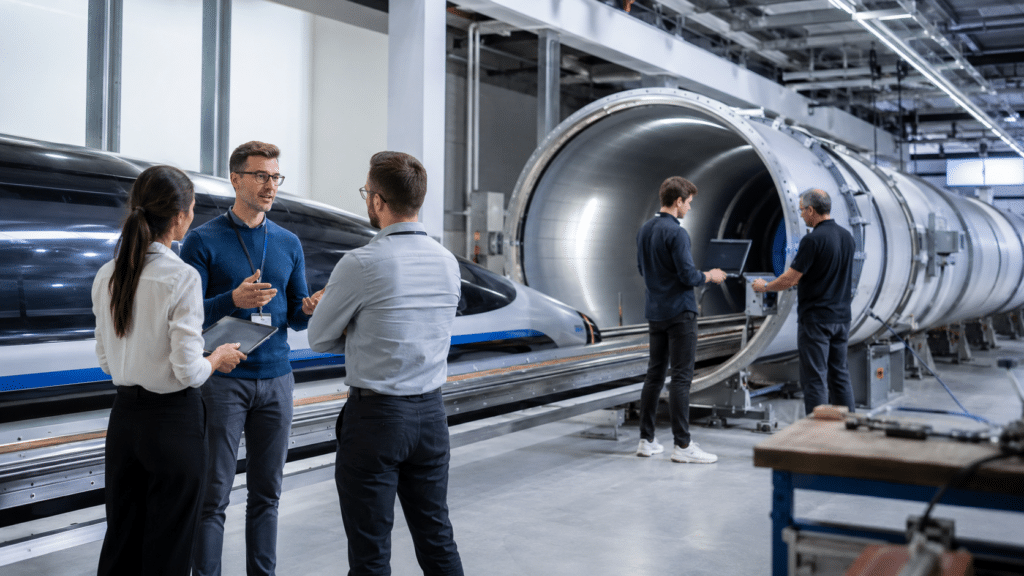
Hyperloops have entered the transportation conversation as well. These have recently generated enormous excitement because they represented a bold vision of the future of efficient transportation.
Yet the path from concept to deployment proved more difficult than many expected.
When Hyperloop One ceased operations in 2023, some observers interpreted it as evidence that futuristic transportation concepts had failed.
However, as an Anticipatory thinker, I see a much different lesson to be learned from such a setback. The value was never the specific technology alone and instead, it was in encouraging leaders to think beyond incremental improvement.
Many of the underlying goals of a hyperloop remain highly relevant, including:
Faster transportation networks
More efficient freight movement
Reduced congestion
Better infrastructure utilization
And what it takes to make these goals a reality is exponential thinking, allowing us to identify practical breakthroughs before they become obvious.
How Is Shared Autonomous Transit Already Changing Transportation?
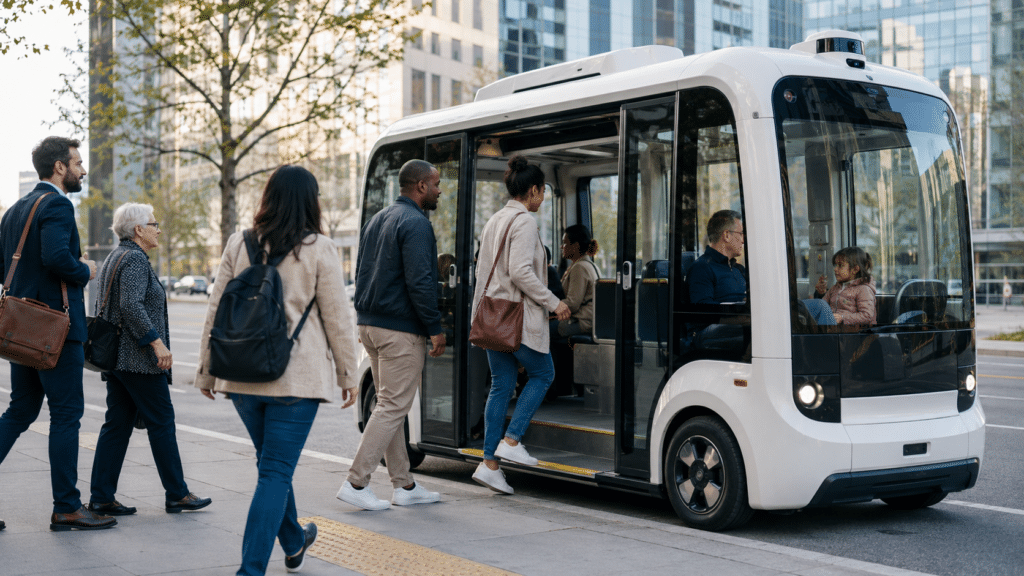
Autonomous transportation is no longer theoretical. Today’s vehicles already include advanced autonomous features that are changing how we drive, improving safety, and steadily reshaping our driving habits.
According to Waymo’s 2025 operational update, the company is now providing more than one million fully autonomous rides per month across its operating markets.
This milestone has really demonstrated to me the emergence of intelligent transportation platforms capable of optimizing routes in real time, reducing operational costs, improving accessibility, and enhancing transportation efficiency.
Think back to how we once imagined self-driving cars before autonomous features became part of everyday driving. Has that future arrived exactly the way we expected?
Probably not. The real lesson is that today’s common autonomous features began with Anticipatory leaders who looked ahead, thought exponentially, and saw how technology could move transportation toward a more autonomous future.
Imagine what this kind of anticipatory thinking will do to the transportation industry in just 5 more years.
What Should Leaders Be Anticipating Right Now?

The future of mobility extends far beyond electric vehicles.
The leaders who gain the greatest advantage are those who think exponentially about new transportation systems. They look past the vehicle itself and see the larger direction of travel.
Mobility ecosystems, shared autonomous transit, advanced air mobility, artificial intelligence, and connected infrastructure are coming together to create entirely new models for moving people, products, and services.
Ask Yourself This Before the Future Arrives
Which transportation assumptions are becoming obsolete?
Which Hard Trends are creating new opportunities?
How can my organization participate in emerging mobility ecosystems?
Are You Ready to Lead the Future of Mobility Before It Leads You?
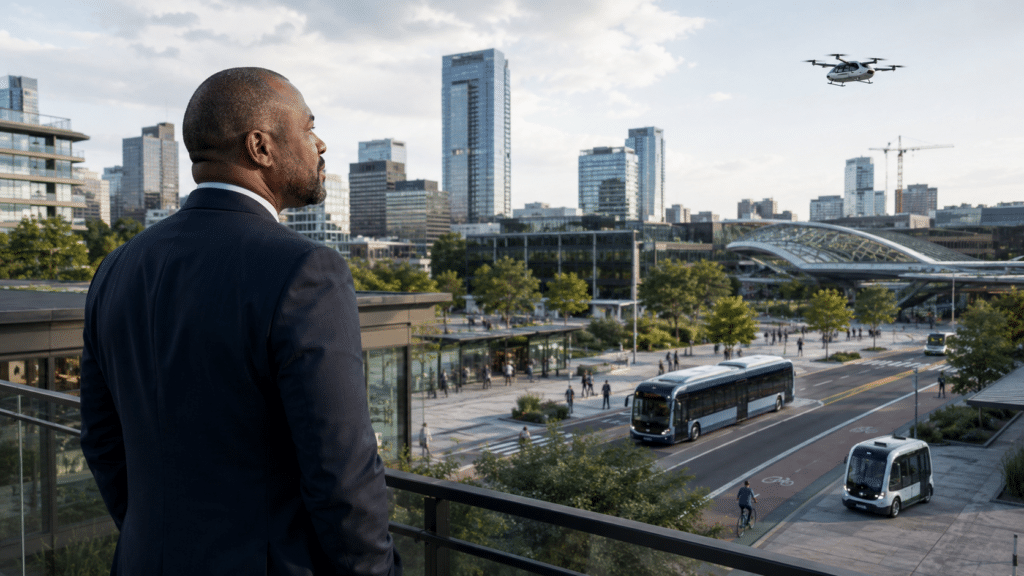
The future of mobility will not be defined by those who wait for change to arrive.
It will be defined by leaders who identify Hard Trends, act with confidence, and use certainty to create new growth before competitors know what happened.
If your organization is ready to see what’s next and act on it now, I can help.
Through my keynote presentations, strategic consulting, and Anticipatory Organization® Transformation Accelerator Program, I help leaders turn disruption into direction, uncertainty into strategy, and future change into measurable advantage.
The question is no longer, “What will the future of mobility look like?”
The better question is, “What role will you play in shaping it?”
Invite Daniel Burrus to help your leadership team anticipate what’s next, identify the Hard Trends shaping your industry, and build strategies that move you from reaction to action.


