


Foresight teams in 2026 have more tools than budget. AI-powered scanning platforms, integrated innovation OS suites, open innovation hubs, and idea management software all promise to spot what’s next and turn it into projects. Yet most teams report the same problem: insights pile up, decisions don’t.
The OECD’s 2026 working paper on technology horizon scanning makes the point clearly. The bottleneck for foresight isn’t signal detection. It’s sense-making and decision handoff. The right tools matter less than where they sit in the innovation process.
This article compares the six enterprise innovation tools strategic foresight leaders most often shortlist in 2026: ITONICS, Qmarkets, HYPE Innovation, Brightidea, Wazoku, and Planview IdeaPlace. Each is rated on trend scouting, idea management, and portfolio decisions. Each gets honest advantages and disadvantages. The goal is a practical shortlist based on where your innovation process breaks.
Most enterprise innovation tools sit in one of three buckets (Exhibit 1):
Exhibit 1: The three buckets for enterprise innovation tools
The lines between these buckets blurred in 2026. AI commoditized scanning, so idea management vendors added trend modules. Innovation OS platforms went deeper into AI-assisted signal detection. The result: vendors look more alike on a feature list than they perform in practice.
The honest test is not “Does this platform have trend scouting?” Almost all of them do. The honest test is “Does the trend module actually drive portfolio decisions?” That answer separates the shortlist from the marketing.
Most tool selection starts wrong. Teams ask, “Which platform has the best AI?” The better question: “Where does our innovation process break?”.
/Still%20images/Element%20Mockups%202025/portfolio-receive-risk-alerts-2025.webp?width=2160&height=1350&name=portfolio-receive-risk-alerts-2025.webp)
Exhibit 2: Follow your interests and watch any element to get alerts on changes, moves, or shifts in momentum
Foresight work runs in five steps:
Scan the environment for weak signals and emerging trends
Filter and cluster signals into meaningful patterns
Develop scenarios or implications for the business
Hand findings to decision makers
Translate decisions into projects and resource commitments
Different platforms strengthen different steps. A team strong at scanning but weak at handoff doesn’t need more scanning. A team with clean signals but no portfolio link doesn’t need better radars.
The honest test for any foresight team: where do your insights die?
Most teams report insights dying at step 4 or 5. The software aims to organize trends. The organization needs decision triggers. Those are different problems requiring different tools.
The right tools match where the process breaks. Buying for your strongest step wastes budget. Buying for your weakest step compounds returns. This single principle changes which platforms make sense for which teams.
Where teams fail to implement ideas from foresight signals
Foresight teams generate ideas. A few of those ideas become active projects. The gap shows up in three repeated patterns.
Each pattern has the same root cause: The toolkit was selected to capture insights, not trigger decisions. The fix isn’t a better radar. It’s a shared understanding of how findings cross from foresight into idea generation and project commitment.
Intel addresses this by routing foresight community work into corporate strategy reviews. Dolby’s Futures Council uses ITONICS to link scanning outputs to portfolio decisions. Both anchor foresight to existing decision-making moments, not parallel reports.
Pick tools that force a handoff. If the system doesn’t surface insights at a moment when someone has to decide, it won’t change the company.
Below are the six innovation platforms most often shortlisted by enterprise innovation and strategic foresight leaders in 2026. Each is rated on three criteria that matter for foresight-driven innovation (Exhibit 3):
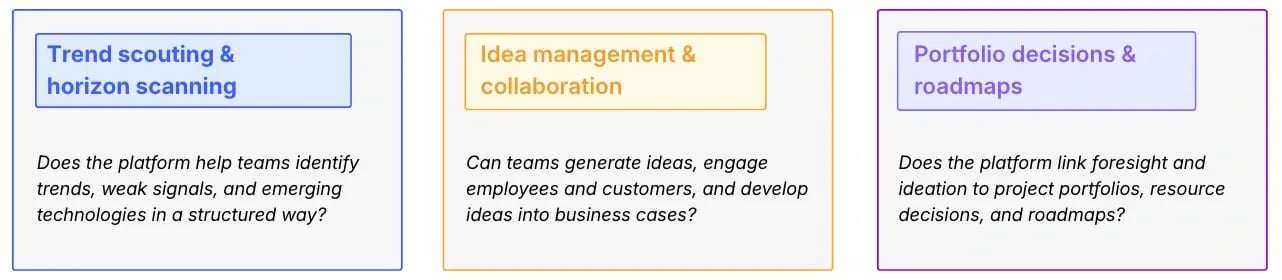
Exhibit 3: Three criteria that matter for foresight-driven innovation
#1: ITONICS
ITONICS is the only platform in this comparison built from the start around foresight as the upstream driver of innovation. Trends, ideas, and projects sit in one environment rather than across three connected tools.
Enterprises with permanent foresight functions, including Intel, Cisco, Dolby, Toyota, and Aerospace Corporation, use the platform to route scanning outputs into portfolio decisions. The AI layer is called Prism.
#2: Qmarkets
Qmarkets covers the same end-to-end innovation lifecycle as ITONICS but leads with governance depth rather than foresight depth. The Trend Management module supports structured scanning and connects to ideation campaigns, but the platform’s heritage strength is stage-gate evaluation and impact tracking.
Used by Ford, Coca-Cola, Nestlé, Merck, and the European Commission. The AI layer is called Iris.
#3: HYPE Innovation
HYPE Innovation is a modular platform where foresight teams typically use the trend module as one component of a broader idea management deployment.
The fit is strongest for enterprises that want configurable workflows across multiple innovation programs rather than a single integrated foresight system. Strategic foresight is supported, but is not the platform’s primary identity.
#4: Brightidea
Brightidea appears on most foresight teams’ shortlists because employee idea management already runs on it, not because it leads on foresight. The Pipeline module handles ideation and execution at scale, but the upstream scanning and trend management capability is thin.
Fortune 500 organizations typically use Brightidea for high-volume crowdsourcing and pair it with a separate tool for foresight work.
#5: Wazoku
Wazoku sits on the open innovation side of the foresight stack. Foresight teams use it when external solver networks are part of how the organization sources new ideas, not for systematic horizon scanning.
The clearest differentiator is global challenge management aligned with sustainability programs and the UN Sustainable Development Goals.
#6: PlanView
Planview IdeaPlace shows up on foresight shortlists through inheritance. Organizations already standardized on Planview’s portfolio management suite want ideation that integrates with their existing PPM tooling.
Foresight teams adopting the platform get the portfolio link first and the foresight depth later. Used by Pfizer, UnitedHealth Group, Citi, and AT&T.
The vendor comparison above doesn’t yield a single winner. The honest answer is that different stages and use cases favor different tools (Exhibit 4).
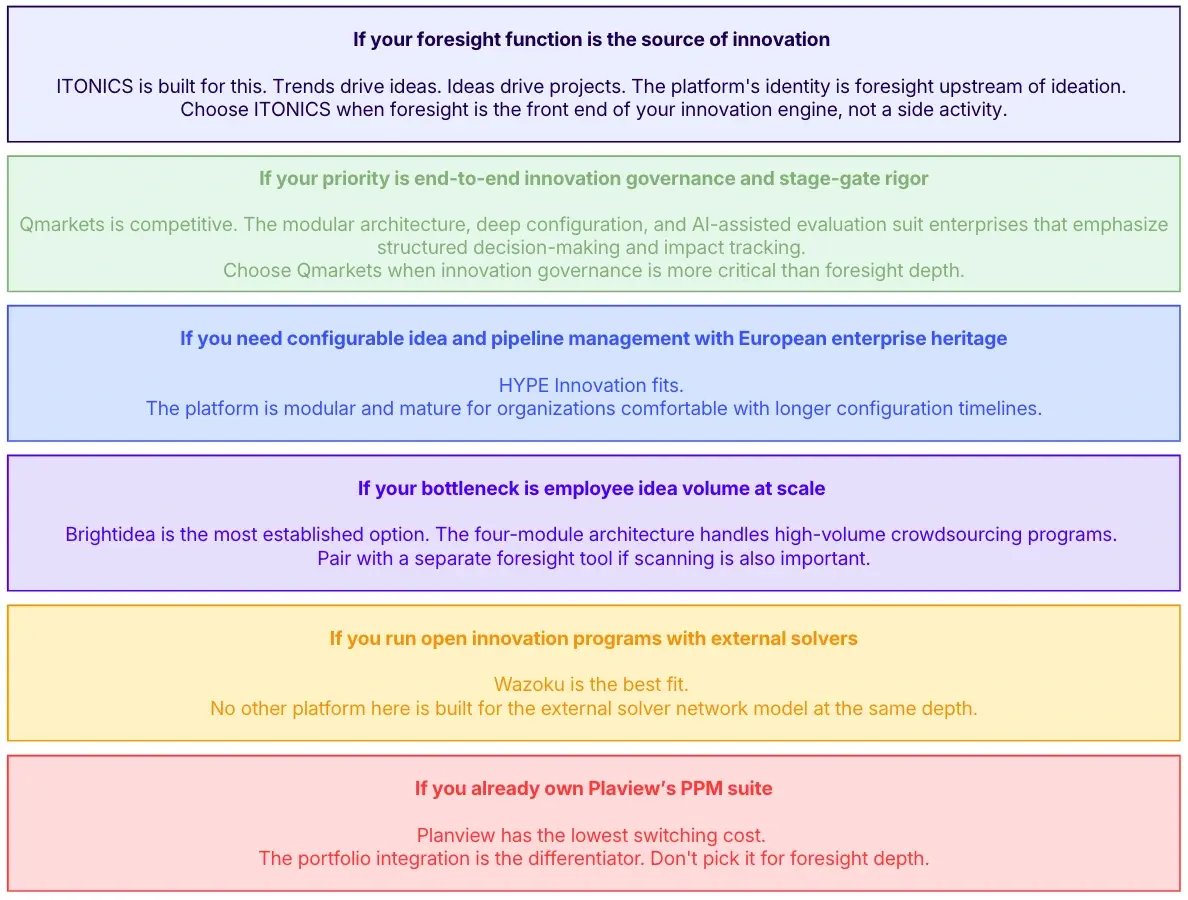
Exhibit 4: The right answers for picking the right tools for the foresight stage
A common mistake among enterprise innovation leaders: defaulting to the most familiar vendor name rather than the closest fit to the actual workflow. The right tools match where your process breaks, not which logo appears most often in industry reports.
The OECD 2026 paper on horizon scanning identifies multiple organizational models for foresight. Dedicated in-house units, federated networks of scouts, hybrid models, and outsourced consultancies all require different infrastructure. Match the toolkit to the model, not the other way around.
From scanning to problem solving: matching the platform to your goal
Innovation tools earn their cost when they convert signals into specific business decisions. Three patterns from real enterprise programs show what that looks like.
Trend-to-roadmap linkage at Cisco.
Cisco’s Technology Radar tracks emerging technologies and connects them to internal R&D priorities. The radar isn’t a standalone artifact. It feeds technology management reviews and roadmap decisions. The platform’s value lies in the linkage to decisions, not the visualization itself.
Distributed scanning at Intel.
Intel built a global trend community of internal experts who collect, evaluate, and interpret signals on a central platform. The system organizes collective intelligence and routes findings to corporate strategy. The platform aims to capture diverse perspectives without losing structure or accountability.
Futures-to-strategy at Dolby.
Dolby’s Futures Council uses an integrated Innovation OS to embed strategic foresight into innovation planning. Scanning outputs feed Council decisions. Council decisions feed portfolio reviews. The toolkit closes the loop from future change to active ideas to project initiation.
Each example shares one trait. The platform is not the work, but an infrastructure that moves foresight from scanning to commitment (Exhibit 5).
/Still%20images/Radar%20Mockups%202025/foresight-keep-everything-on-your-radar.webp?width=2160&height=1350&name=foresight-keep-everything-on-your-radar.webp)
Exhibit 5: Keep everything on your radar to align teams and actions on what matters next
The practical takeaway for problem-solving with any of these tools: when evaluating a vendor demo, run it against a real decision your organization needs to make in the next quarter. If the platform doesn’t visibly help that decision, the visualization is irrelevant.
Most enterprise innovation and strategic foresight leaders spend more time choosing than the platform deserves, and less time defining the decisions the platform must support. Reverse that ratio, and the shortlist gets shorter.


