


Most companies managing innovation partnerships are using the wrong software. They adopt a CRM, build spreadsheets on the side, and wonder why their startup scouting programs stall, their technology partnerships stay shallow, and their open innovation programs attract the wrong partners.
The problem is tooling, as CRMs were built for sales pipelines. Affiliate platforms were built for revenue attribution. Neither was designed to manage the complexity of a technology partnership, a startup collaboration, or a university R&D program.
This guide is for innovation managers, R&D leads, technology scouts, and strategy teams who manage strategic and technology partnerships – not resellers, not affiliates. If you’re looking to track which startups are solving which strategic challenges, which technology partners are moving from scouting to active collaboration, and which open innovation programs are generating pipeline worth investing in, this is the right guide.
Here’s what the best innovation partnership management platforms actually require – and which tools deliver it.
What is an innovation partnership management platform?
An innovation partnership management platform is software that helps companies find, evaluate, structure, and track strategic external partnerships.
These partnerships span a wide range.
Technology vendors offering capabilities your R&D team wants to test. Startups whose solutions could accelerate a product roadmap.
Universities producing research with commercial applications.
Ecosystem partners – accelerators, VCs, incubators – that provide access to early-stage innovation.
What distinguishes these relationships from commercial partnerships is the metric. Commercial partnerships are measured in revenue attribution and commission payouts. Innovation partnerships are measured in strategic value: new capabilities acquired, technologies validated, R&D timelines shortened, and innovation pipeline generated.
That difference drives completely different platform requirements.
A reseller partner needs deal registration and commission tracking.
A technology startup partner needs a structured evaluation workflow, a proof-of-concept management system, a way to connect their capability to your internal challenges, and visibility into where they stand in your pipeline.
Most platforms on the market were designed for the first case. This guide focuses on the second.
Why spreadsheets and CRM fail innovation partnership programs
Innovation teams default to tools they already have: The CRM tracks the relationship, the shared drive holds the documents, and the spreadsheet tracks evaluation status.
Exhibit 1: Why spreadsheets and CRMs fail for innovation partnership programs
The result: partnerships that could generate real strategic value get lost in process gaps. The program generates activity but not outcomes.
The 4 strategic partnership types innovation teams manage
Not all innovation partnerships work the same way. A startup pilot has different stakeholders, timelines, and success criteria than a university research collaboration. The right platform needs to handle all of them, but with different workflows for each.
Here are the four types innovation teams most commonly manage.
Type 1 – Technology and startup partnerships
These are the most common for corporate innovation and R&D teams. You’ve identified a technology gap or a capability you want to acquire without building it internally. You search for startups or technology vendors who might close that gap.
Type 2 – Peer idea sourcing: Customers, partners, and suppliers
Companies open a specific problem to external partners – startups, researchers, entrepreneurs – and invite solutions. Bosch runs a program that attracts roughly 1,000 technology partner applications per year (Exhibit 2).
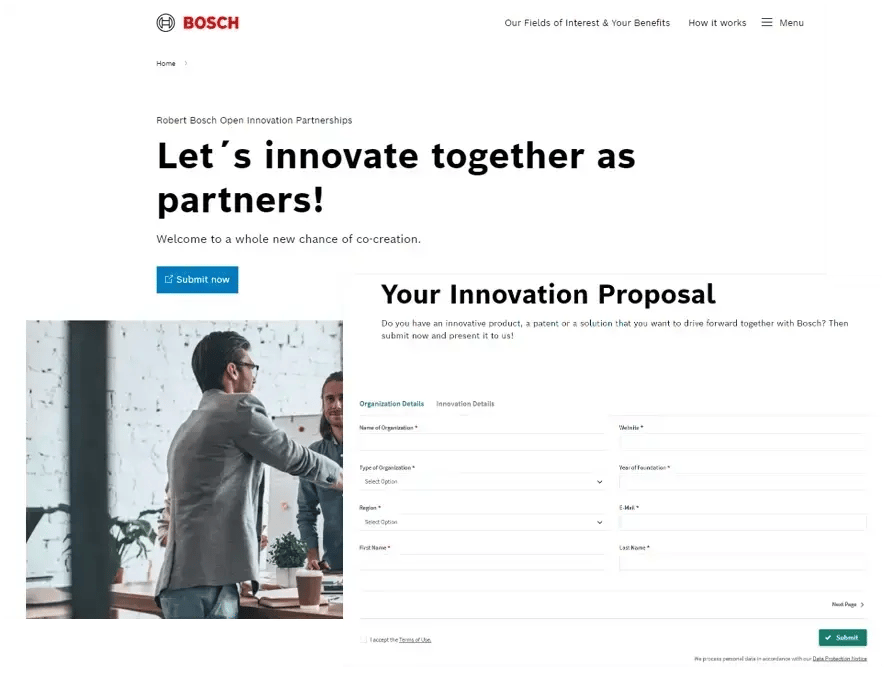
Exhibit 2: A gateway to receive outside-in perspectives and co-creation with external partners for Bosch
Type 3 – University and research partnerships
R&D-intensive companies – in pharma, automotive, industrial goods, and advanced manufacturing – maintain ongoing relationships with university research groups. These partnerships have long time horizons. They require structured milestone tracking, IP management considerations, and coordination between technical and legal teams.
Type 4 – Ecosystem and network partnerships
Accelerators, VCs, incubators, and industry associations are relationship multipliers. Instead of directly providing innovation, they provide access to pipelines of startups and technologies.
Managing these relationships requires tracking which ecosystem partners are sending relevant introductions and turning introductions into structured evaluations efficiently.
The 7 essentials of the best idea management software
Most platforms that claim to support innovation partnerships were built for something else. They lack the intake structure, evaluation depth, and portfolio visibility that strategic partnership programs actually require.
These seven capabilities separate purpose-built platforms from everything else (Exhibit 6).
1. External submission portal
The first filter in any innovation partnership program is inbound. You need a way for external partners to submit their technology, capability, or research proposal without requiring an account, a lengthy form, or a sales call with your team.
/Still%20images/External%20Webpage%20Mockups%202025/ideation-collect-external-ideas-2025.webp?width=2220&height=1410&name=ideation-collect-external-ideas-2025.webp)
Exhibit 3: Use the ITONICS submission portal to crowdsource ideas from external partners
The best platforms provide a configurable, brandable submission portal (Exhibit 3). Partners submit what you ask for – technical description, development stage, relevant use cases – and nothing more. The portal is public-facing, and no login is required.
What makes a submission portal effective is what happens after submission. The data flows directly into a structured evaluation workflow. Nothing sits in an inbox waiting to be manually transferred to a spreadsheet.
2. Structured evaluation workflows
Evaluating a technology partner is a multi-stage, multi-stakeholder process.
An R&D engineer assesses technical feasibility.
A business unit leader assesses strategic fit.
A procurement contact assesses supplier requirements.
Legal reviews IP implications.
A platform that can’t model this process forces you to manage it in email: Decisions get delayed, criteria get applied inconsistently, and the quality of your partner evaluation degrades as volume increases.
/Still%20images/Workflows%20Mockups%202025/capabilities-workflows-custom-ratings.webp)
Exhibit 4: Set custom criteria and calculate averages to make clear decisions
The best platforms allow you to design evaluation stages without engineering support. Each stage has defined criteria, assigned reviewers, and clear progression conditions. Partners move through the pipeline based on outcomes at each stage, not on whoever remembers to update the spreadsheet.
3. Portfolio visibility across all partnerships
Managing twenty partnerships in isolation is twenty separate problems. Managing twenty partnerships as a portfolio reveals which stage most relationships stall at, which technology areas are underrepresented, and which partnerships are progressing toward real collaboration.
Look for interactive portfolio views that let you slice your partner pipeline by technology area, partnership stage, strategic priority, and business unit relevance. The goal is pattern recognition, not just status tracking.
ITONICS’s radar and portfolio views are designed specifically for this. You can see your entire technology partnership landscape as a visual portfolio – from early scouting to active collaboration – and navigate to any individual relationship from the same view.
4. Connection to internal challenges and strategic priorities
An innovation partnership program without a clear problem statement produces random activity. The best platforms connect external partnerships explicitly to internal strategic challenges.
When a startup or technology vendor submits a proposal, it gets matched to the relevant challenge – not lost in a general inbox.
This connection is what transforms a partnership program from a list of contacts into a strategic asset. Partnership data becomes input for R&D roadmap decisions, portfolio reviews, and investment prioritization.
5. Partner-facing collaboration tools
Strategic partnerships require two-way engagement:
A startup going through your evaluation process needs to know where they stand.
A university partner needs access to shared project documents.
A technology vendor in a proof-of-concept phase needs to communicate findings to your internal team.
The platform must support this interaction without forcing partners to use your internal tools. Role-based access controls let you define exactly what each external partner can see and do. They get a structured experience. You maintain control of what’s visible.
The alternative – managing external partner communication through email – guarantees that important information gets buried and progress stalls when team members change.
6. AI-assisted scouting and monitoring
The volume of startups, technologies, and research outputs relevant to any given strategic challenge is large and constantly changing. Manual scouting – attending conferences, reading reports, following news – misses most of it.
The best platforms integrate AI-powered monitoring that scans external signals and surfaces relevant partnership candidates automatically. This includes startup databases, technology publications, patent filings, and research outputs.
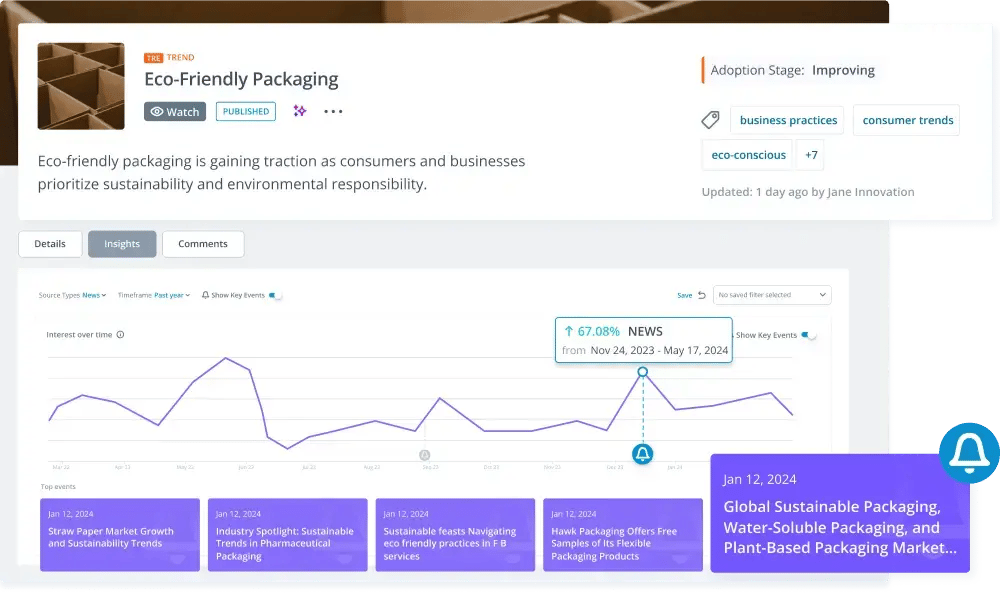
Exhibit 5: Prism continuously scans millions of signals to identify opportunities that match strategic criteria
This reduces the time between identifying a relevant partner and beginning evaluation. Teams that automate scouting reach promising partners earlier and with less effort.
7. Reporting connected to strategic outcomes
Activity metrics – number of applications received, partners in evaluation, partnerships completed – tell you how busy your program is. And strategic outcome metrics tell you whether it’s working.
The best platforms report on partnership outcomes:
how many technology partnerships moved from scouting to proof-of-concept,
how many resulted in active collaboration or procurement,
what strategic challenges have been addressed, and
what innovation pipeline has been generated across all partnership activity.
This reporting is what justifies the program internally and shapes investment decisions about where to focus scouting effort next. Without it, partnership programs run on intuition. With it, they run on evidence.
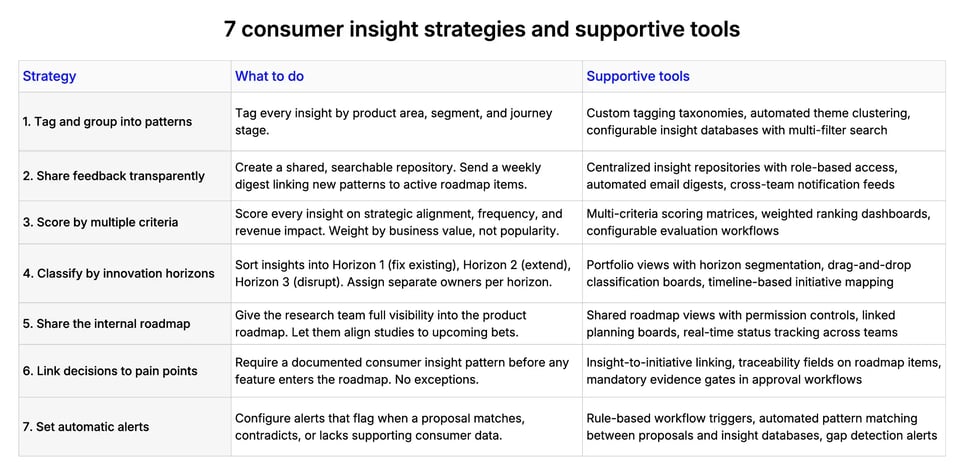
Exhibit 6: The 7 essentials of the best innovation partnership management platform
Top 7 innovation partnership management platforms
The market for innovation partnership management software is fragmented. Some platforms were built for startup scouting. Others for open innovation challenges. A few attempt to cover the full lifecycle. Most commercial PRM tools appear in search results for this category, but were designed for reseller and affiliate programs – a fundamentally different problem.
The seven platforms below are relevant specifically for innovation, R&D, and strategy teams managing technology partnerships. They vary significantly in scope, depth, and fit depending on your program type. Evaluate them against your primary bottleneck, not against a generic feature checklist.
1. ITONICS
ITONICS is the most comprehensive innovation operating system on the market, built specifically for companies managing technology partnerships, startup scouting programs, open innovation challenges, and R&D collaborations at scale.
Unlike platforms designed for commercial partnerships, ITONICS manages the full lifecycle of a strategic innovation partnership – from initial scouting and external submission to evaluation, proof-of-concept, and integration into the broader innovation portfolio.
2. Bloomflow
Bloomflow is a French innovation management platform positioned around innovation partnership portfolio management. It supports the full cycle from open call and scouting through to project tracking and portfolio analytics.
3. Wazoku
GlassDollar is purpose-built for venture clienting – the model where large companies source and pilot startup solutions as paying customers, rather than as investors.
4. SwitchPitch
SwitchPitch is a startup scouting platform designed specifically for enterprise innovation teams. It positions itself as a research and discovery tool for finding and tracking startup partnerships.
5. Planview
Planview’s innovation management capabilities, which include the former Sopheon Accolade platform, serve R&D-intensive industries with complex innovation governance requirements.
6. Agorize
Agorize is an open innovation platform focused on running innovation challenges and hackathons that attract external participants – startups, students, researchers, and independent innovators.
7. Salesforce Experience Cloud
Some enterprises build their innovation partnership portals on Salesforce Experience Cloud, using the platform’s partner portal capabilities combined with custom workflow configuration.
Choosing the right innovation management platform
Before comparing platforms, answer three questions honestly.
The most common selection mistake
The most common mistake: treating innovation partnership management as a CRM extension problem.
CRMs track relationships with known contacts in known contexts.
Innovation partnership programs manage relationships with unknown external parties across uncertain evaluation processes.
But: The underlying data model is different. The process logic is different. The partner experience requirements are different.
Companies that extend their CRM for innovation partnership management spend six months building something that doesn’t work and another six months explaining why adoption is low.
Therefore, start with the process and continue to define your partnership types, evaluation stages, and scoring criteria. Then find a platform that accommodates that process without requiring you to rebuild it from scratch.
Managing innovation partnerships with ITONICS
ITONICS was built for exactly the programs this guide describes: It handles the full innovation partnership lifecycle in a single platform with
Bosch uses ITONICS to run an open innovation gateway that processes roughly 1,000 technology partner applications annually. Around 20 partnerships per year move into active collaboration, contributing to a program NPV of approximately €8M per year.
Toyota uses ITONICS across its innovation management process. The combination of systematic external technology scouting and internal crowdsourcing generates over €120M in annual R&D pipeline NPV.
The common pattern across these programs: the platform makes the process scalable. Before ITONICS, the same programs ran on spreadsheets and email threads: applications got lost, evaluations were inconsistent, and outcomes were hard to report. After ITONICS, the process is systematic, the outcomes are visible, and the program can grow without proportionally growing the team.
If you’re managing innovation partnerships at scale, or building the foundation for a program that needs to scale, ITONICS is the most complete platform in this space.


