


Most companies have no formal process for tracking change in their business environment. They rely on quarterly strategy sessions, individual gut instincts, and Google searches. By the time a trend reaches a search result, someone else has already built a strategy around it.
For example, Gillette controlled over 70% of the global razor market. But Gillette had no formal process to connect a social shift to its product strategy. Dollar Shave Club launched and built a $1 billion business partly by understanding an emerging beard culture among millennials.
The cost of this is not just missed opportunities. It is a permanent reactive posture. Companies that lack a disciplined foresight process make decisions based on visible, present conditions. That is structurally too late.
Exhibit 1: 10 strategic foresight methods to reduce uncertainty
This guide explains what continuous foresight is, why most organizations fail at it, who should own it, and how to build a process that gives your company a real competitive advantage.
The myth of the crystal ball
Many leaders misunderstand foresight from the start. They treat it as a prediction. Either they expect it to forecast the future with certainty, or they dismiss it entirely as speculation.
Both positions are wrong. Foresight is not a crystal ball. As Kara Cunzeman, Senior Project Lead for Strategic Foresight at The Aerospace Corporation, put it in a recent interview:
The myth that foresight is the only answer to unlocking the secrets of the future is also a fallacy. It helps to open the mind, which helps to make better decisions. Still, there’s always the element of surprise, which is a fact of life.
Foresight is a disciplined approach to understanding your business environment before disruption forces you to react. The goal is not certainty. The goal is preparation for better informed future planning. Surprises become less costly when you have already thought through plausible futures.
Strategic foresight is the practice of systematically scanning your environment to surface emerging trends, weak signals, and emerging technologies. It helps organizations make better decisions today by structuring how they think about tomorrow.
Continuous foresight takes this further. It treats the foresight process as an ongoing organizational capability, not a periodic exercise. The scanning never stops. Insights flow directly into strategy development, investment decisions, and innovation planning.
This distinction matters because disruption does not follow a quarterly schedule. Shifts in technology, regulation, and consumer behavior emerge continuously. A company running annual foresight workshops is always operating on outdated intelligence.
The 3 reasons most companies fail at strategic foresight
Despite widespread recognition that foresight matters, most organizations fail to build it into their strategic process. The failure is rarely about resources. It is about structure. Three patterns cause the majority of foresight programs to collapse or develop no strategic value.
Reason 1: Foresight is treated as a project, not a process
The most common failure starts with how foresight gets initiated. A rapid change hits the industry. Leadership gets anxious. A task force convenes, runs a trend analysis, and produces a set of future scenarios. The urgency subsides. The task force disbands. Nothing changes structurally.
Six months later, the company is back in the same position. Another potential disruption arrives, and another task force is formed. The foresight work never accumulates. The organization gains no comprehensive understanding of emerging challenges in its future environment because the learning resets with every cycle.
Think about what this means in practice. If you have no continuous foresight process for monitoring your environment, you will not spot a trend until it is already in the mainstream. By then, you are searching Google for the same relevant information that your competitor built a strategy around two years ago, losing your technology edge and ability to stay relevant in a volatile world.
Reason 2: Teams collect data but produce no actionable insights
The second failure is more subtle. Some organizations run horizon scanning consistently. But they drown in data. Teams pull from industry reports, online platforms, scientific literature, and external sources. The signal volume is high. The insight volume is near zero.
This happens when foresight teams lack a structured path from raw observation to long-term thinking and decision-making. Individual analysts track signals in isolated spreadsheets. Departments do not share what they are seeing. Nobody synthesizes the patterns across domains into something a decision maker can act on.
Foresight without synthesis is just reading. Identifying opportunities requires the additional step of connecting weak signals across domains and drawing a clear line to a future business implication. That connection is the value. Most organizations never make it.
Reason 3: One person’s worldview drives the whole strategic process
The third failure is the quietest and most dangerous. Many companies have a de facto foresight function: a single senior leader who reads widely, follows certain publications, and shapes the organization’s view of future changes based on personal perspective.
That person’s blind spots become the company’s blind spots. They scan the domains they find interesting and ignore the ones they do not. They weigh signals that confirm what they already believe and dismiss signals that challenge it.
Effective strategic foresight requires diversity across scanning domains, analytical methods, and perspectives. Technological developments, economic shifts, social trends, environmental factors, and political changes all need dedicated attention. No single analyst — however talented — can cover all five with equal rigor.
/environmental-scanning-process.webp?width=2500&height=1408&name=environmental-scanning-process.webp)
Exhibit 2: 5 steps of the environmental scanning process
The 4 competitive advantages of a continuous foresight process
Organizations that commit to continuous foresight do not just avoid disruption more effectively. They build structural advantages that compound over time. Here is what the discipline actually delivers.
Early identification of future opportunities. Continuous scanning surfaces signals at an early stage, before they reach mainstream awareness. That timing gap is your window to pilot new products, enter new markets, or build capabilities before competitors have confirmed the trend is real. Companies that identify opportunities at the signal stage have months or years of head start over those that wait for the trend to confirm.
Better decision-making under uncertainty. When your team maintains a library of plausible futures and future scenarios, strategic decisions are no longer all-or-nothing bets on a single outcome. Decision makers can choose approaches that hold across multiple scenarios or build in explicit triggers that shift the strategy if a specific signal strengthens. That is a fundamentally more resilient way to allocate resources.
Resilience against potential disruptions. Organizations with mature foresight capabilities build resilience over time. They have already thought through many of the scenarios that other companies encounter as complete surprises. That preparation does not prevent disruption. But it dramatically reduces the time and cost of response when disruption arrives.
A durable competitive edge. Continuous foresight is difficult to replicate quickly. A competitor can copy your product feature in a quarter. They cannot replicate two years of accumulated signal intelligence, a trained foresight team, and a strategic process built around anticipating future changes. That depth creates an advantage that does not erode easily.
The 7-step process to implement continuous foresight
A functional continuous foresight process moves through five phases in sequence. Each step produces the input the next one requires. Organizations that try to skip to scenario planning without rigorous scanning, or jump to strategy without clear synthesis, produce generic outputs that leadership ignores.
Step 1: Defining who is accountable for continuous foresight
This is where most foresight programs collapse. Organizations acknowledge that strategic foresight matters, budget a small allocation for it, assign it as a secondary responsibility to an existing role, and then wonder why it never produces results.

Exhibit 3: Foresight team roles
The answer is accountability. Continuous foresight cannot be a side project. It requires a named owner, a formal mandate, a dedicated budget, and access to senior leadership. Without all four, the process will be the first thing cut when a quarter is tight.
In large organizations, the foresight function sits within a Strategy or Innovation Center of Excellence. The foresight lead reports to the Chief Strategy Officer or Chief Innovation Officer.
In mid-size companies, a single Strategic Foresight Manager can run an effective program if equipped with the right tools and explicit organizational backing.
What consistently fails: assigning foresight to a strategy analyst who already has a full portfolio of other responsibilities. A 10% time allocation produces a 10% foresight capability. That is not enough to sustain a continuous process or build the credibility needed to influence strategic decisions.
Step 2: How to build a foresight team that delivers results
A strong foresight team is small but deliberately diverse. It typically combines a foresight lead with experience in futures methods, one or two analysts with strong trend research and synthesis skills, and at least one person with deep domain knowledge of your core industry.
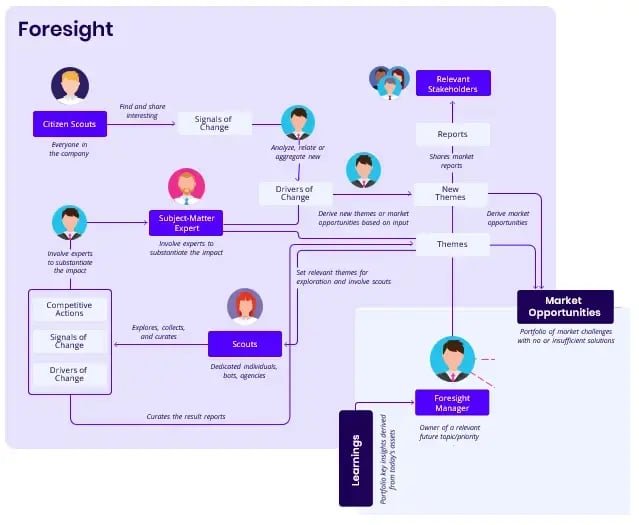
Exhibit 4: The foresight universe and its team members
External perspectives sharpen the work. Most weak signals appear at the edges of your industry — in adjacent sectors, academic research, early-stage startups, and regulatory activity. A team that only scans its own industry will consistently miss the signals that matter most.
The team needs a direct communication channel to leadership. Foresight insights that never reach the people making resource and investment decisions cannot change outcomes. Build that channel into the operating model before you start scanning. Otherwise your team produces intelligence that nobody acts on.
Step 3: Choosing the right foresight tools
Manual foresight does not scale. An analyst can read only so many publications. A spreadsheet becomes unusable once it holds hundreds of signals across multiple domains. At a certain point, the right tools determine whether your foresight process runs continuously or collapses under its own administrative weight.
Effective foresight tools handle four functions.
Automated signal detection monitors a wide range of sources without requiring manual search.
Collaborative analysis lets team members rate, annotate, and connect signals together in a shared environment.
Visualization converts trend intelligence into radar views that business leaders can interpret without a briefing.
And integration connects foresight outputs to your strategic planning and portfolio workflows.
That last point matters more than most teams realize. Foresight tools that operate as standalone systems create friction at the exact moment where insight needs to become action. Build your capability on purpose-built platforms from the start. General-purpose tools — spreadsheets, presentation software, shared documents — are adequate for producing outputs. They cannot support the continuous, collaborative, structured process that strategic foresight at scale requires.
Step 4: Set up your environmental scanning system
Environmental scanning is the foundation of any strategic foresight capability. It means systematically monitoring your business environment across five dimensions: technological developments, economic shifts, social and cultural changes, environmental factors, and political or regulatory developments.
The first practical step is scope definition. Before you start scanning everything, decide what you are scanning for and assign domain ownership. Technology scanning goes to a researcher with R&D or engineering fluency. Regulatory scanning goes to someone with policy or legal awareness. Consumer behavior scanning goes to someone close to the market. Clear ownership prevents the most common failure: broad scope, shallow coverage.
Set a weekly cadence. Horizon scanning sessions do not need to be long — 90 minutes per week per analyst is sufficient for an initial setup. Consistency matters far more than intensity. A team that scans for 90 minutes every week for a year builds a richer and more connected signal library than one that runs a 3-day intensive workshop twice annually.
Step 5: Detect weak signals at an early stage
Weak signals are the raw material of strategic foresight. They are early-stage indicators of potential future changes — ambiguous, easy to dismiss, and highly valuable precisely because they have not reached mainstream awareness yet.
Train your team to recognize them by their characteristics.
Weak signals typically appear at the edges of your industry, challenge assumptions that most people in your sector take for granted, and surface across multiple unrelated domains at roughly the same time.
That last pattern is particularly important. When a signal appears in technology, policy, and consumer behavior simultaneously, it is rarely coincidence.
For every signal your team identifies, run a quick three-question assessment.
What is the potential impact if this develops fully?
How fast might that development happen?
How uncertain is the direction?
This triage keeps your signal library actionable rather than overwhelming.
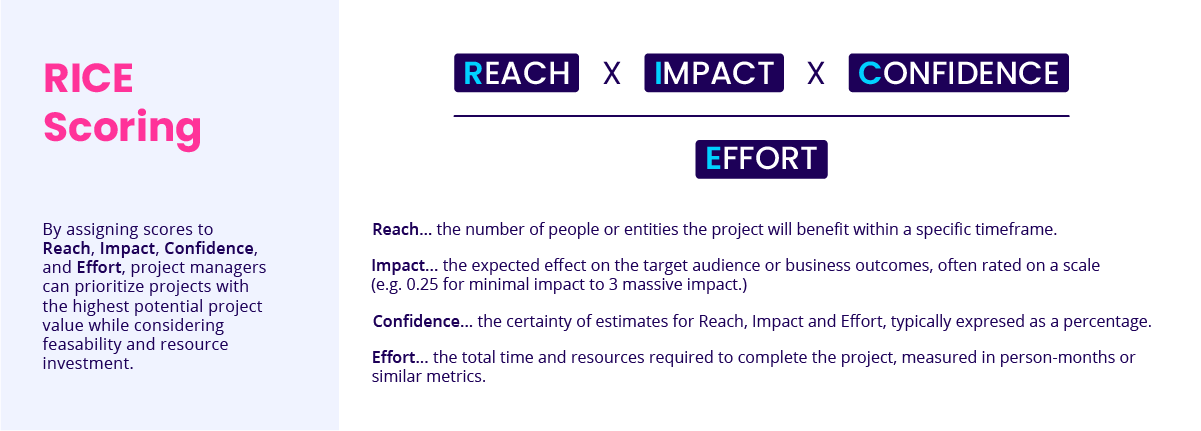
Exhibit 5: RICE scoring framework explained
Every signal belongs in a shared system, not a personal email thread or individual spreadsheet. Continuous foresight depends on cross-domain pattern recognition. That recognition cannot happen if signals live in silos.
Step 6: Build four potential scenarios from your signals
Once your team has accumulated a meaningful body of signals and emerging trends, strategic planning converts that intelligence into structured views of the future.
The standard approach is to identify two critical uncertainties from your scanning work. Choose forces that are both highly impactful and genuinely uncertain in direction. Use them as the axes of a 2×2 matrix. The four quadrants become your four potential scenarios — distinct, internally coherent versions of your future business environment.
Each scenario should describe technological developments, competitive dynamics, regulatory conditions, and customer behavior in a plausible future state. Write them as narratives, not bullet lists. A scenario that reads like a story is more useful in strategic conversations than one that reads like a database entry.
Use these four potential scenarios to stress-test your current strategy. Which of your strategic initiatives hold up across all four? Which depend on a single scenario being true? Where do you have dangerous blind spots? This is the moment where continuous foresight stops being interesting research and starts producing direct strategic value.
Step 7: Connect foresight findings to strategic initiatives
Foresight that does not change decisions is research, not strategy. The critical translation step is moving from scenario insight to concrete strategic implication.
For each significant finding, define the decision it affects. If emerging technologies indicate a shift in how your customers will evaluate products within three years, which roadmap decisions need to change now? What capabilities need to be built before that shift arrives? What partnerships make sense at an early stage that would be expensive or unavailable later?
Connect your foresight process formally to your strategic planning cycle. Foresight outputs should arrive at planning sessions as structured briefings with clear options and explicit assumptions — not as comprehensive reports that leave interpretation entirely to the audience. The job of your foresight team is to make the strategic implications obvious, not to give leadership a reading assignment.
Track which insights influenced which decisions. This creates the evidence base that sustains your foresight investment when leadership questions its value.
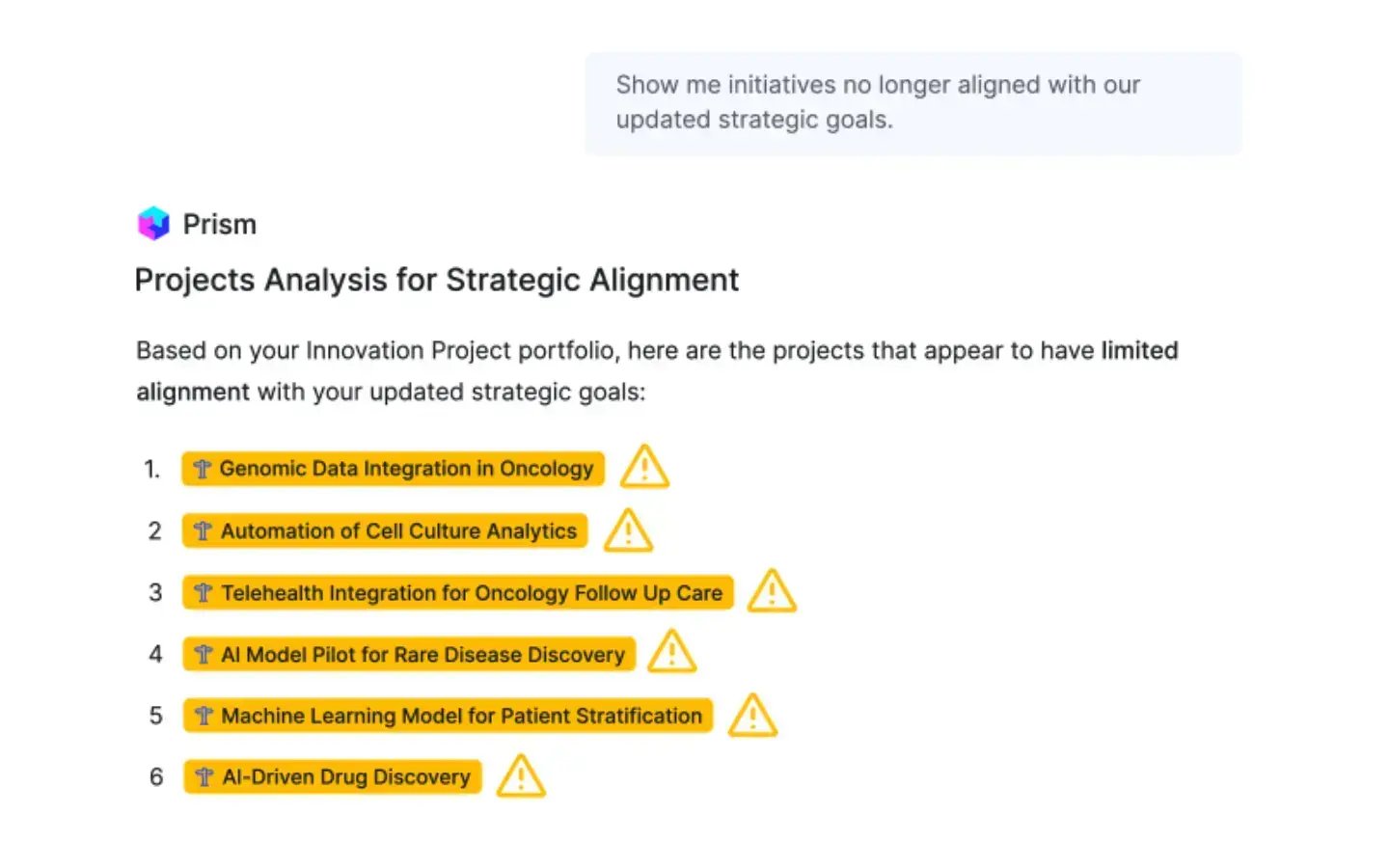
Exhibit 6: ITONICS AI assistant flags off-strategy projects
Step 8: Embed foresight into everyday decision making
The final step is making strategic foresight a routine trigger in how decisions are made across the organization — not just in the annual planning cycle.
Before any significant investment decision, run a brief foresight review.
What emerging trends are relevant to this bet?
Which future scenarios does it assume?
Are there weak signals that suggest those assumptions deserve scrutiny?
This review does not need to take long. It needs to happen every time.
Run quarterly foresight check-ins with senior leadership. These sessions should update the future intelligence library based on new signals, review which trends have accelerated or stalled, and recalibrate strategic priorities accordingly. Decision-makers who see foresight intelligence regularly start using it in conversations. That behavioral shift is the ultimate sign that your foresight process has become embedded.
Provide real-time insights in the formats your leadership already uses. A dashboard that surfaces relevant signals for each business unit when they need them creates far more value than a quarterly PDF report that arrives after the relevant decision has already been made.
Step 9: How to measure whether your foresight process is working
Foresight programs are often cut because their value is assumed rather than demonstrated. You cannot directly attribute a decision outcome to a foresight insight the way you attribute revenue to a campaign. But you can measure proxy indicators that build the internal case.
Three metrics matter. Lead time advantage tracks how much earlier your process surfaced a trend compared to when it appeared in mainstream industry coverage. Decision quality compares, in retrospect, how foresight-informed decisions performed against intuition-driven ones. Strategic traceability measures the percentage of current strategic initiatives that can be directly linked to a foresight insight.
These metrics build a compelling case for sustained investment. Organizations that document foresight impact consistently secure the support needed to scale the capability over time.
Automating market shift and emerging trend discovery to stay ahead and gain deeper understanding
Manually tracking signals across dozens of sources is how foresight teams burn out. By the time an analyst has reviewed industry publications, patent filings, startup databases, and regulatory updates, the week is over, and the signal library has three new entries.
AI-powered trend detection changes that equation. Instead of analysts searching for signals, relevant developments surface automatically based on your defined strategic priorities. The system monitors thousands of sources continuously and flags what matters — so your team spends time interpreting signals, not hunting for them.
/Still%20images/Element%20Mockups%202025/foresight-stay-in-the-loop-2025.webp?width=2160&height=1350&name=foresight-stay-in-the-loop-2025.webp)
Exhibit 7: ITONICS alert informing about an increase in the trend “Autonomous Networks”
Radar visualizations give strategy and R&D teams a shared, real-time picture of the forces shaping their market. Trends are plotted by maturity and relevance. Weak signals sit at the periphery. Confirmed trends sit closer to the center. Everyone looks at the same map, which cuts the alignment time that usually slows strategic decisions down.
Collaborative scoring lets cross-functional teams rate and annotate signals together. A technology scout and a market strategist often interpret the same signal differently. That tension produces better analysis than either would produce alone.
The result is a foresight process that runs continuously without requiring continuous manual effort. Your team stays ahead of market shifts because the discovery work never stops — even when the analysts are working on something else.
Get from hundreds of signals to informed strategic decisions with ITONICS
The ITONICS Innovation OS provides you with the most interactive and widely used radar views. ITONICS is the only market intelligence software that seamlessly connects your environmental scanning activities with ideation and project portfolio management, enabling business leaders to gain insights and make informed decisions.
/Still%20images/Radar%20Mockups%202025/capability-views-ease-multi-criteria-decisions-2025.webp?width=2160&height=1350&name=capability-views-ease-multi-criteria-decisions-2025.webp)
Exhibit 8: A trend radar, highlighting the impact of the trend convergence of AI
Centralize scouting intel: Gathering insights from diverse external sources, such as industry publications, market reports, and customer feedback, is often inefficient. ITONICS centralizes scouting in one platform, allowing you to organize data on startups, technologies, and trends in interactive radars, making it easy to collaborate, identify patterns, and maintain a competitive edge.
Build engaging reports: Transform your environmental scanning efforts into actionable insights with customizable, data-driven reports in ITONICS. Export your results into PowerPoint, embed interactive radars on webpages, or sync your data with digital tools like Power BI or Tableau, supporting strategic decision making.
Automate opportunity discovery: Manually tracking and evaluating new opportunities takes time and resources. ITONICS automates opportunity discovery using artificial intelligence, keeping you up to date with the latest political, economic, social, technological, environmental, and legal factors. This ensures you stay ahead of industry trends, regulatory changes, and emerging risks, providing valuable insights for your innovation strategies and strategic planning process.


