


Most large enterprises run 50 to 300 concurrent initiatives. Decisions about which to fund, reprioritize, or stop rely on outdated PowerPoint reports and fragmented data from 5 to 10 disparate tools.
The result is expensive guesswork. According to a 2025 Gartner survey, 62% of CIOs lack access to consolidated portfolio views. Poor visibility adds hidden costs ranging from 10 to 30% to major initiatives – through redundancy, rework, and delays.
This article is for CIOs, CTOs, and enterprise architects managing complex technology portfolios across multiple business units or regions. It presents a practical five-step framework to achieve actionable technology portfolio visibility within 12 months.
Your portfolio is costing you more than you think
The 2024–2026 period is exposing gaps that were easy to ignore before.
Each of these pressures shares the same root cause: organizations funding technology investments they cannot clearly see.
And the problem is not only waste. Portfolio visibility also unlocks growth: Teams with a clear picture of their technology landscape can identify strategic gaps where no enabling technology supports a priority domain.
They can map emerging technologies – generative AI, green hydrogen, advanced materials – to capabilities, revealing white spaces for new ventures.
They can allocate 5 to 10% of the portfolio to high-uncertainty bets with defined stage gates, and quickly decommission experiments that do not hit their KPIs.
Without visibility, pilots multiply without scale. Promising bets die from lack of strategic context. Innovation becomes theater.
Board-level questions go unanswered:
Without a connected portfolio view, leadership cannot answer these questions with confidence.
Stop calling it a visibility problem – it is a decision infrastructure problem
Technology portfolio visibility is a dynamic, interconnected model that links technologies, products, capabilities, and risks to strategic outcomes.
Three common tools that organizations already own fall short of true visibility:
Configuration management databases (CMDBs) focus on technical configuration. They do not provide strategic context, cost profiles, or risk ratings.
One-off audits capture snapshots. Mature visibility requires near real-time updates – weekly or monthly – traceable from project level to corporate strategy.
Static inventories list IT assets. Visibility maps each asset to business objectives and strategic priorities.
The distinction matters for decision-making:
A CMDB tells you what exists.
Portfolio visibility tells you what to keep, retire, or invest in – and why.
Most organizations already have the raw data. What they lack is the connective layer that turns asset lists into decisions.
How a fragmented portfolio fails in practice
Without connected portfolio views, large enterprises repeat predictable failures (Exhibit 1).
Duplicated AI pilots drain R&D budgets without producing scale. Overlapping SaaS tools accumulate across business units. Conflicting roadmaps slow product launches. Legacy systems continue drawing maintenance budgets while blocking modernization. Risk concentrations – vendor lock-in, end-of-support platforms, regulatory exposure – stay invisible until they become crises.
Exhibit 1: Typical failure patterns without portfolio visibility
These failures share a pattern: fragmented data, no single owner, and no common view of what matters to the business.
From inventory to insight: a 5-step technology portfolio visibility framework
This framework is designed for organizations that want actionable results in 6 to 12 months (Exhibit 2). Each step builds on the previous one.
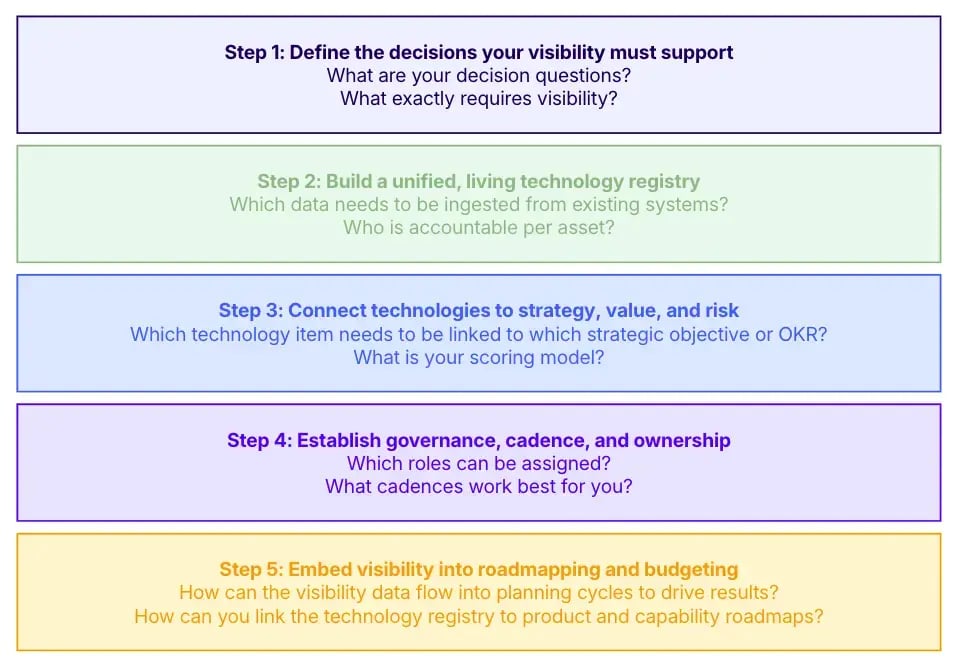
Exhibit 2: The 5-step framework for technology portfolio visibility
This connects strategy to execution. Resource allocation becomes evidence-based. Portfolio decisions gain credibility because they rest on data the organization maintains and trusts.
Real-world patterns: technology portfolio visibility in action
Volkswagen Group: standardizing across 43 factories
Volkswagen faced a common enterprise problem: each factory ran isolated, site-specific IT systems. Standardization was nearly impossible, and scaling new technology required repeated effort at every plant.
The key enabler was replacing isolated systems with a single connected platform – exactly what technology portfolio visibility makes possible at scale.
Unilever: aligning commerce technology to global strategy
Unilever’s digital commerce operations grew rapidly across markets, but the underlying technology landscape grew with it – fragmented and region-specific. Legacy tools accumulated faster than they were retired.
Merck and AstraZeneca: confronting fragmented clinical data
In pharma, the stakes of poor technology visibility are regulatory as much as financial.
Both companies moved from fragmented tool sets to connected portfolio views before deploying AI at scale. That sequence was not incidental.
How ITONICS enables technology portfolio visibility
ITONICS provides an Innovation OS that centralizes technology inventories, innovation portfolios, and external signals in one SaaS platform.
Key capabilities supporting the five steps above:
Centralized technology registry: Ingests data from CMDB, ITAM, and project tools. Replaces spreadsheet-based reporting with a maintained, living registry.
Visual portfolio tools: Technology radars, portfolio views, and roadmaps make complex landscapes readable for leadership teams in minutes.
AI-assisted analysis: Clusters signals, flags portfolio risks, and surfaces related technologies based on weak signals from external sources.
Integrated foresight: Maps external trends, startups, and patents to internal portfolio gaps, connecting the innovation horizon to the current portfolio.
Roadmap integration: Links the technology registry directly to product and capability roadmaps, embedding visibility into planning cycles rather than sitting beside them.
ITONICS is the strategic layer that CMDBs lack – connecting what exists to what matters for the business.
To explore how ITONICS addresses your 2025 to 2026 portfolio questions, schedule a demo focused on your specific IT estate and current initiatives.


