


Corporate R&D hit a record $1.3 trillion in 2024. Yet 27% of the world’s top 100 companies are now cutting their innovation budgets, according to WIPO data. Both groups face the same underlying innovation challenge: they cannot show a clear return on what they spend.
BCG’s 2025 Most Innovative Companies report, spanning 20 years of data, confirmed no consistent link between R&D investment levels and total shareholder return. Spending more does not create a competitive advantage. Choosing better does.
The top 50 most innovative companies in BCG’s ranking outperformed the broader market by 2.4 percentage points annually on average. What separates them is how they manage their innovation pipeline: which bets they make, how they sequence projects, and what they are willing to stop. That is innovation portfolio management.
Method
Why
What
How
Strategic alignment scoring
Portfolio decisions default to politics without a shared evaluation standard
A weighted scoring model that evaluates every innovation project against consistent criteria tied to strategic objectives
Define criteria, score independently across reviewers, rank results, and never fund below the strategic alignment threshold
Portfolio balance: three-horizon model
Most innovation portfolios over-index on Horizon 1 and have no Horizon 3 exposure
A framework that distributes innovation investment across incremental, adjacent, and transformational innovation types
Map every project to a horizon, calculate budget allocation per horizon, compare against innovation ambitions, rebalance deliberately
Phase-gate process
Without formal decision points, underperforming innovation projects never get killed
A structured process with defined development stages and go/kill governance gates between each
Define stages, set mandatory gate criteria, assign cross-functional gate authority, require evidence not presentations
Innovation roadmaps
Sequencing conflicts and critical path risks stay hidden when innovation projects are managed in isolation
A multi-layer, time-based plan showing all innovation projects, dependencies, and resource allocation on one shared timeline
Build one portfolio-level timeline, map dependencies explicitly, identify the critical path, update at every gate review
Project triage
Innovation portfolios accumulate. Governance capacity does not
A systematic process for removing low-value innovation initiatives to concentrate scarce resources on high-value ones
Centralize all active projects, apply minimum threshold criteria, rank survivors, reallocate freed resources within the same cycle
Collaborative scoring
Single-executive portfolio decisions carry bias, blind spots, and advocacy distortion
A multi-reviewer evaluation process where stakeholders score innovation projects independently before results are aggregated
Share scoring criteria in advance, score independently, aggregate results, treat score variance as a diagnostic signal
Innovation accounting & dashboards
Lagging financial metrics miss innovation performance problems until it is too late to act
Stage-appropriate KPIs surfaced in real time across the full innovation portfolio
Define metrics by portfolio stage, build a shared dashboard with automated exception alerts, review weekly at the portfolio level
Exhibit 1: 7 innovation portfolio management methods to maximize return on investment
This article covers seven innovation portfolio management methods (Exhibit 1) with the strongest evidence behind them. Each section covers the business case, the research, and the specific digital features that make innovation portfolio management work at scale.
What innovation portfolio management is (and what it is not)
Innovation portfolio management is the discipline of selecting, funding, sequencing, and governing projects and strategic initiatives to maximize return on investment against short-term and long-term company goals and strategic objectives.
Idea generation fills the top of the innovation pipeline with new ideas and innovative ideas worth exploring. Strategic objectives define the innovation risk and the beliefs of future success. Innovation portfolio management combines those streams and decides which of those innovative ideas move forward, at what pace, and how to allocate resources.
While project management executes individual projects, innovation portfolio management governs the entire system. Leaders decide what new ideas enter the pipeline, what gets more investment, and what stops.
In a nutshell, innovation portfolio management is about finding the right composition of innovation activities that maximizes future success with today’s resources.
Exhibit 2: Phase-gate process for effective idea management
The innovation pipeline trap
Many organizations mistake a filled pipeline for a healthy portfolio.
A pipeline full of innovation activities feels like momentum. An actively managed portfolio asks the harder question: are these the right projects to be running?
Without innovation portfolio management, early-stage ideas accumulate without real scrutiny. Resources are diluted across too many innovation efforts.
BCG calls the result “zombie innovation”: organizations going through the motions without strategic clarity or governance over their growth opportunities.
What effective innovation portfolio management delivers
A 2024 Forrester Total Economic Impact study found that enterprises with structured portfolio management processes launch one additional new product within five years and cut time-to-market by 15 to 30%. Successful companies that organizations invest in studying share one common trait: deliberate project portfolio governance, not higher R&D budgets.
Managing projects effectively at the portfolio level improves informed decision-making across the business. It surfaces growth opportunities that siloed innovation efforts will never reveal, and gives leadership the visibility to allocate resources toward growth opportunities rather than politics.
Why most innovation portfolios underperform
Three failure patterns explain most underperformance in managing innovation portfolios.
Too many innovation projects, too few resources
Organizations consistently overload their portfolio. When scarce resources are spread across 20 projects instead of 10, none move fast enough to win. Speed is a key portfolio variable.
PDMA research confirms resource overloading as one of the top causes of poor innovation performance. The fix is fewer, better-funded innovation projects – not more budget.
No mechanism to stop underperforming innovation efforts
Most companies have no formal project management criteria to stop underperforming initiatives.
Sunk cost bias keeps bad projects alive. Every dollar spent on the wrong initiative is a dollar unavailable for the right one.
Innovation strategy disconnected from business objectives
BCG found that companies incorporating four or more strategy-alignment practices outperformed the median percentage of sales from new products by five percentage points. Those with none underperformed by five points.
When innovation efforts are not grounded in strategic objectives and company goals, decisions become political. This misalignment is a structured process failure, and the seven innovation portfolio management methods below fix it.
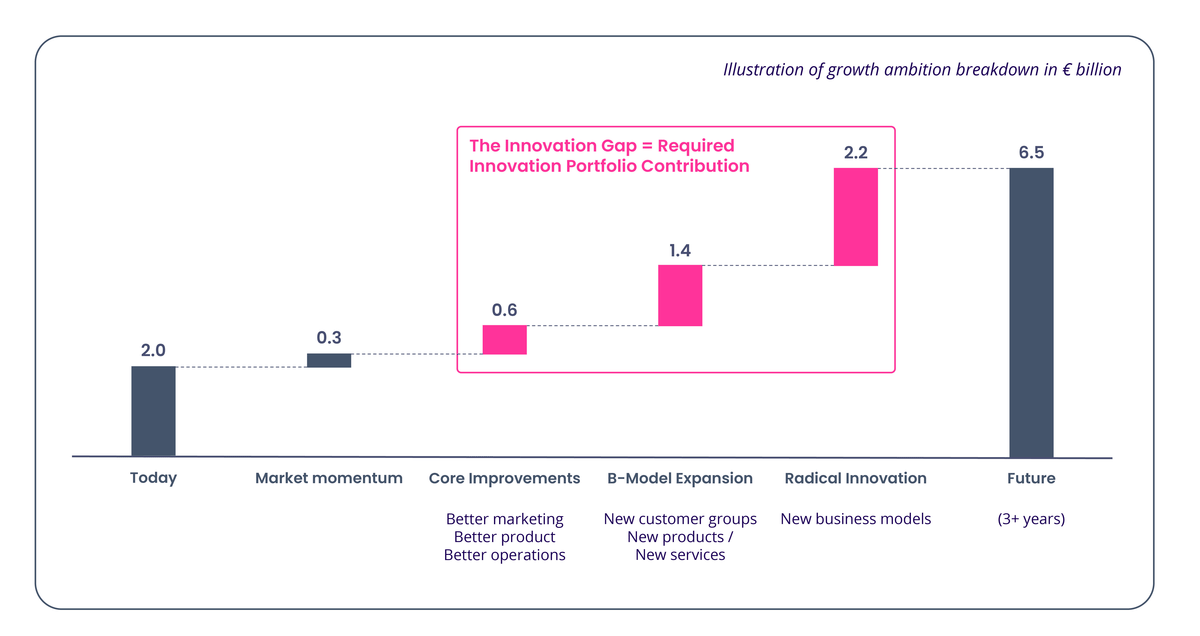
Exhibit 3: Translation of a growth ambition into a strategic portfolio mix
7 innovation portfolio management methods that drive ROI
Not all innovation portfolio management methods carry the same weight. Some help you choose better. Others help you govern better. The best ones do both. From the list of the seven methods below, each addresses a specific failure point in managing portfolios, and each one works better when the others are in place.
1. Strategic alignment scoring
Innovation portfolio management without scoring is governance by persuasion. Whoever argues loudest wins the budget. A scoring-based structured approach ends that dynamic and replaces it with evidence.
A scoring model evaluates every project against consistent criteria:
strategic fit with company goals,
market potential,
technical feasibility,
resource requirements,
and expected return on innovation potential.
Each criterion carries a weight. Each initiative earns a score. Ranked lists let portfolio managers prioritize investments rather than debate them.
Why scoring transforms innovation portfolio decisions
BCG’s research confirms that companies using formal scoring systems make program decisions faster and with stronger alignment to strategic objectives. The structured approach converts investment discussions from opinion-based to evidence-based, enabling the kind of informed decision-making that separates high-performing innovation management from the rest.
Scoring also creates an audit trail for managing innovation decisions over time. When a high-scoring project fails, you learn something about the model. When a low-scoring project gets funded politically and fails, you have concrete data for governance reform. Both outcomes make future innovation portfolio management sharper.
The digital features that make scoring work at scale
Scoring fails in spreadsheets. A shared sheet lets one reviewer see another’s score before completing their own, destroying the independence that makes the structured process valuable.
/Still%20images/Radar%20Mockups%202025/capabilities-collaboration-clustering-evaluating-viewing.webp?width=2160&height=1350&name=capabilities-collaboration-clustering-evaluating-viewing.webp)
Exhibit 4: Project radar showing projects with status “challenging”
Dedicated scoring modules solve this. They allow reviewers to score projects independently before results are aggregated automatically. Weighted criteria builders let teams configure different templates for different types of innovation. Version-controlled scoring histories show how a project’s position has evolved across review cycles, creating a defensible record for strategic calls.
Portfolio visualization layers (radars, innovation ambition matrix, boards) translate scores into maps that make competitive edge visible: which projects justify continued investment and which do not.
What to avoid in scoring
The most common mistake: scoring new projects and then ignoring the results. If leadership overrides the model, it loses credibility.
A second mistake: applying the same criteria to all types of innovation. Early stage ideas with radical innovation potential need different evaluation criteria than incremental programs nearing launch.
2. Portfolio balance: the three-horizon model
A strong portfolio does not mean equal investment across all programs. It means intentional investment in the right mix of innovation, given your strategic objectives and risk tolerance.
The three-horizon model structures this.
Horizon 1 covers incremental innovations: improvements to existing products for existing customers, with 12 to 18 month payback windows.
Horizon 2 covers adjacent initiatives: moves into new markets or new business models, with 2 to 5 year timelines.
Horizon 3 covers transformational projects: breakthrough innovation and radical innovation bets that could redefine the business model in 5 or more years.
Mapping your portfolio and balancing risk
Most organizations, when they map their portfolio for the first time, find 90 to 95% of their investments sitting in Horizon 1. That is a structural risk to portfolio diversity and long-term market leadership.
The innovation ambition matrix, popularized by BCG, extends the horizon model by plotting initiatives on two axes: distance from the core business and clarity of the target market. It connects innovation ambitions to how companies balance risk across the full portfolio and surfaces whether the portfolio can capture emerging opportunities in new markets or remains locked to existing products and existing customers.
The 70-20-10 rule is the most common starting allocation for innovation budget: 70% to Horizon 1, 20% to Horizon 2, 10% to Horizon 3. Companies facing disruptive innovation threats must shift capital toward Horizon 2 and 3, or they risk managing a well-resourced portfolio of innovation programs that are becoming irrelevant to shifting consumer needs.
One critical point: the allocation needs to reflect where your strategic objectives are pointing. A balanced portfolio requires deliberate rebalancing, not reverse-engineering a ratio to defend the status quo.
The digital innovation portfolio tools that make portfolio balance visible
Portfolio diversity and balance risk analysis fail without a single aggregated view of how investments are actually distributed across the portfolio.
Portfolio dashboards that aggregate all projects under one view – tagged by horizon, type of innovation, and resource allocation – give portfolio managers the visibility needed to see the full picture.
Matrix visualizations plot initiatives by strategic alignment and investment size, turning abstract portfolio balance into something a leadership team can assess and act on in one session. Without this aggregated view, managing innovation investment allocation means working from multiple spreadsheets that never quite add up to a coherent innovation portfolio picture.
3. Phase-gate process
Only 25 to 45% of new products succeed in the market. In some industries, failure rates reach 85%. Companies using modern phase-gate processes achieve success rates of 63 to 78%. The gap is not talent or technology. It is innovation management governance.
Phase-gate innovation portfolio management divides the innovation process into sequential stages (e.g., discovery, scoping, development, testing, launch) with formal review gates between each. At each gate, a cross-functional team evaluates whether a project meets the criteria to advance.
Projects that do not meet the standard get killed, paused, or redirected.
How phases and gates govern the innovation process
Gates solves the “no kill” problem in managing innovation. Each gate is a structured decision point. It’s a systematic review of whether this initiative deserves continued investment given what the team has learned.
Gate reviews require evidence, not presentations. Early gates evaluate market assumptions and alignment with strategic objectives. Later gates evaluate commercial viability, internal processes, and resource requirements. Each gate catches a different failure mode in the innovation process before it becomes expensive.
The digital features that make phase-gate work
Manual gate processes break down when portfolio teams are managing innovation across 20 or more active projects and 5 stages simultaneously.
/Still%20images/Workflow%20Builder%20Mockups%202025/capabilities-workflow-define-clear-approval-rules.webp?width=2160&height=1350&name=capabilities-workflow-define-clear-approval-rules.webp)
Exhibit 5: Workflow with decision gate configuration
Configurable workflow automation moves projects through stages automatically once criteria are met, notifies reviewers when decisions are required, and time-stamps every outcome. Time-in-stage tracking across the full innovation portfolio surfaces systemic bottlenecks.
Gate scorecards with mandatory fields ensure every initiative is evaluated on the same dimensions, making innovation portfolio management decisions comparable across review cycles.
A gate that never stops projects is not a gate. It is a status meeting with better slides.
4. Innovation roadmaps
Scoring tells you what to fund. Portfolio balance tells you how to distribute innovation investments. Roadmaps tell you when each innovation project should move, in what sequence, and what depends on what.
An innovation portfolio roadmap is a time-based plan that maps all active innovation projects across multiple layers: market trends, consumer signals, technology readiness, product milestones, resource availability, and strategic objectives. It connects innovation portfolio management strategy to day-to-day execution.
Portfolio roadmaps vs. project roadmaps
Most organizations have project roadmaps. Far fewer have portfolio roadmaps. The difference determines how well the organization handles strategic decisions under real conditions.
A project roadmap shows milestones for one initiative. A portfolio roadmap shows all active innovation projects on a shared timeline, with dependencies and resource management visible across the entire innovation portfolio. Sequencing conflicts that are invisible in a project view become obvious at the portfolio level.
If three Horizon 2 innovation programs all require the same engineering team in Q3, a portfolio roadmap surfaces that conflicts months ahead. A collection of project roadmaps surfaces it only when the team is already overcommitted, turning a portfolio management issue into an execution crisis.
Critical path mapping across the innovation pipeline
A portfolio roadmap also reveals the critical path: the chain of innovation projects that determines how fast the entire innovation pipeline can move. A delay in a foundational technology initiative can cascade into three downstream product launches. Without a portfolio roadmap, that risk stays hidden.
The most effective portfolio roadmaps integrate external signals (emerging trends, emerging opportunities, and shifting market trends) alongside internal milestones. This keeps innovation portfolio management responsive to strategic decisions rather than locked to last year’s plan.
The digital features that make roadmaps actionable
A portfolio roadmap built in presentation software is a snapshot, not a resource management tool. It goes stale the moment a milestone shifts or a team’s availability changes.
/Still%20images/Roadmap%20Mockups%202025/portfolio-visualize-critical-paths-2025.webp?width=2160&height=1350&name=portfolio-visualize-critical-paths-2025.webp)
Exhibit 6: Roadmap with projects and milestones showing schedule conflicts
Interactive, multi-layer roadmap tools maintain a live innovation portfolio view. Dependency mapping automatically propagates the impact of a delay across all connected innovation projects. Resource conflict detection flags when two innovation programs require the same team in the same window, turning what would be a crisis into a deliberate strategic decision.
Layered views (strategic goals, market signals, and initiative timelines in one synchronized canvas) let portfolio managers move between the strategic and operational perspectives without maintaining separate documents.
5. Project triage
Innovation portfolios grow. Governance capacity does not. Triage is the discipline of removing low-value innovation projects from the portfolio to concentrate scarce resources on high-value initiatives.
Triage is more aggressive than scoring. Scoring ranks innovation projects. Triage asks a harder question: which ongoing projects should stop now, and which should get significantly more?
Why fewer innovation projects outperform larger portfolios
PDMA research shows portfolio size and innovation performance are negatively correlated when resource allocation does not scale with project count. A well-resourced innovation project with a clear champion will outperform three underfunded initiatives every time. Depth beats breadth in managing innovation investment.
The uncomfortable implication: most large companies running 15 to 25 ongoing projects could stop 40% of their innovation portfolio and accelerate the rest. Every initiative stopped is a capability released to fund a stronger one.
How to run portfolio triage
Start with a centralized inventory: all active innovation projects in one place, with current resource allocation, stage, and score visible. This step alone surfaces surprises: forgotten initiatives, duplicated new projects, and active spending on work with no executive owner.
/Still%20images/List%20Mockups%202025/portfolio-oversee-tasks-and-assignments-2025.webp?width=2160&height=1350&name=portfolio-oversee-tasks-and-assignments-2025.webp)
Exhibit 7: A table with conditional formatting rules showing portfolio risks
Apply minimum threshold criteria. Any innovation project failing standards on strategic alignment with business objectives, technical feasibility, or innovation potential gets flagged before scoring begins. Work below the threshold gets paused, killed, or merged. Remaining initiatives get ranked. Resources move from the bottom of the ranking toward the top within the same cycle.
The digital features that make triage executable
The overhead of assembling a project list before a triage session is a key reason organizations skip this critical step in managing innovation portfolios.
Portfolio platforms with centralized registries eliminate that overhead. All active innovation projects, their current stage, scoring history, and resource consumption are visible before the session starts.
Threshold-based filters automatically surface initiatives that fall below minimum criteria. Kill, pause, and merge workflows execute decisions with a single action and update resource availability across the entire portfolio in real time.
Kill rate tracking becomes possible when triage is systematized. A healthy innovation portfolio has a kill rate. Tracking it over time tells you more about portfolio management governance than any project success metric.
6. Collaborative scoring and prioritization
Decisions made by a single executive are vulnerable to bias and advocacy distortion. Collaborative scoring brings multiple stakeholders into evaluation with a shared methodology and is one of the most underused innovation portfolio approaches in practice.
The method works best when the criteria are shared in advance, reviewers score innovation projects independently, and results are aggregated before discussion. Score divergence between reviewers is the most useful signal the process produces.
Why score variance is the key diagnostic
When a technology lead scores an innovation project high and a commercial lead scores it low, the divergence shows exactly where risk is hiding in the innovation portfolio. The technology assumption may be sound. The market assumption is not. A decision that starts with that data resolves faster and more accurately than one that starts with advocacy.
High-variance signals unclear criteria or a weak value proposition in the innovation project. Low variance on every innovation initiative in every review signals a rubber-stamp process.
Who should score and how to implement collaborative reviews
Strategy leads assess alignment with strategic objectives and business objectives. Finance reviews resource requirements and return projections for each innovation project. R&D evaluates feasibility and innovation risk. Commercial leads assess market potential and consumer demand.
Well-designed digital review environments separate collaborative scoring from group discussion. Asynchronous scoring, in which each reviewer scores innovation projects independently before results are revealed, prevents anchoring. Score distribution views make divergence immediately visible. Comment fields tied to each criterion let reviewers explain their reasoning without requiring a meeting. Audit trails record every portfolio decision and its rationale, making innovation portfolio management decisions defensible and repeatable.
7. Innovation accounting and real-time portfolio dashboards
You cannot practice effective innovation portfolio management without visibility into your innovation portfolio. Innovation accounting defines and tracks the right metrics at each stage of the innovation process in real time.
Standard financial metrics are lagging indicators. They report on decisions made quarters ago. Innovation portfolio management needs leading indicators that signal whether innovation projects are on track before it is too late to course-correct.
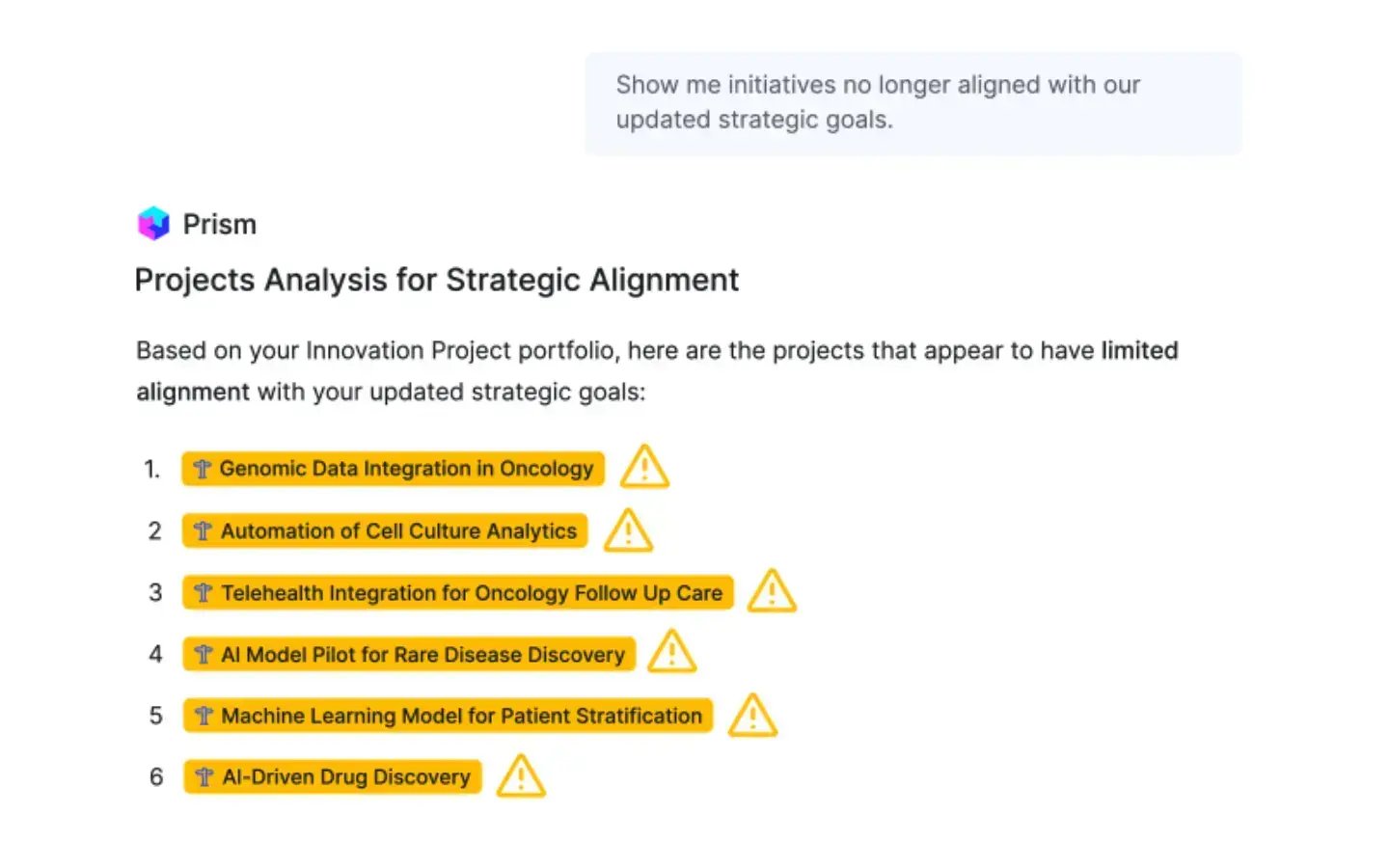
Exhibit 8: ITONICS AI assistant flags off-strategy projects
The measurement mismatch problem
Most organizations apply the same financial metrics to all innovation projects regardless of stage. This is the wrong structured approach, and it damages portfolio performance.
Measuring a Horizon 3 innovation initiative on Year 1 revenue kills every transformational bet. The project has no revenue yet. That is the point. What it should have is validated assumptions, narrowed risk, and a clearer path to new markets. Measuring innovation strategy execution too early pushes teams to manufacture quick wins at the cost of the learning that determines whether the bet is worth making at all.
Stage-appropriate metrics solve this. Early-stage innovation projects: assumptions tested, validation rate, time-to-next-gate. Mid-stage: budget adherence, customer validation scores, milestone completion. Late-stage: time-to-market, revenue projection accuracy, launch readiness. Innovation portfolio level: horizon balance, kill rate, and return on innovation investment by quarter.
What strong innovation portfolio dashboards track
Successful companies that achieve financial success through innovation portfolio management use portfolio dashboards to enable exception-based governance. Portfolio managers spend time on flagged innovation projects, not on assembling status updates.
A strong innovation portfolio dashboard surfaces three exception types: innovation projects stalled in a stage longer than expected, innovation initiatives exceeding resource budgets, and ongoing projects whose scoring has dropped significantly since last review. Organizations using these systems report 20% improvement in innovation portfolio ROI tracking and 30% time savings in status reporting.
The digital features that make innovation accounting work
Real-time innovation portfolio visibility requires a system that all project teams actively update. When data entry is a burden, it does not happen consistently. When data is inconsistent, leadership stops trusting the dashboard – and portfolio decisions revert to instinct.
Well-designed platforms reduce data entry to the minimum: status, stage, and key metrics in a single submission. Automated aggregation pulls innovation project data into portfolio-level views without manual compilation.
Configurable alert logic turns the dashboard from a reporting tool into an active innovation portfolio management system, notifying portfolio managers when an innovation initiative stalls, a budget deviates, or a milestone is missed well before the next monthly review.
How to sequence these innovation portfolio management methods
No method works in isolation. The innovation journey from strategy to return requires all seven innovation portfolio management methods working together in a deliberate sequence.
Start with strategic alignment scoring. Before applying any other method, confirm that your innovation portfolio connects to your business objectives and company goals. Scoring surfaces the gaps and gives every portfolio decision a defensible foundation.
Apply the three-horizon model. Assess whether your innovation portfolio is balanced across horizons. Check whether the mix of incremental innovations, adjacent innovation initiatives, and transformational projects matches your innovation ambitions and strategic objectives.
Build the portfolio roadmap. With the right innovation projects identified and the innovation portfolio balanced, the roadmap sequences them. Resource management conflicts surface. Dependencies become visible before they delay the innovation pipeline.
Run portfolio triage. With scoring, balance, and sequencing established, triage makes precise portfolio decisions. Scarce resources freed from low-priority innovation projects go directly to critical-path programs.
Implement phase-gate governance. Gates keep portfolio management active. Every innovation initiative gets reviewed at defined milestones against established scoring criteria and business objectives.
Add collaborative scoring to gate reviews. Bring stakeholders into formal evaluation to reduce bias and build cross-functional support for innovation portfolio management decisions.
Track through innovation accounting. A real-time dashboard ties all seven innovation portfolio management methods together, making portfolio performance visible and alerting leaders to innovation challenges before they compound.
The sequence matters. Innovation portfolio management discipline built in this order creates a self-reinforcing system where each method strengthens the others. Managing innovation this way is how organizations move from aspiration to return.
Start straight optimizing your innovation pipeline with ITONICS
The ITONICS Innovation OS is the best innovation management software to run a successful innovation process. Our Innovation OS embodies all the essentials of the best innovation management software and covers all the application areas in one tool.
/Still%20images/Kanban%20Board%20Mockups%202025/portfolio-govern-project-boards-2025.webp?width=2160&height=1350&name=portfolio-govern-project-boards-2025.webp)
Exhibit: An idea board filtered by all projects “on track”
With ITONICS, organizations can:
Eliminate Information Silos: ITONICS centralizes all your innovation projects, ideas, and teams in one place. Reduce duplicated efforts, dispersed teams, and disconnected data.
Track Actionable KPIs: ITONICS allows companies to define and track KPIs that align with their strategic goals. This ensures that innovation projects are delivering value and contributing to business success.
Generate Customized Reports: Create tailored innovation reports that meet the needs of different stakeholders. Whether you need a high-level business summary or a detailed project breakdown, ITONICS makes it easy to generate the right reports.
Facilitate Cross-Functional Collaboration: By centralizing innovation activities in one platform, ITONICS helps break down silos and encourages collaboration across teams and departments.


