


Whether it’s managing cost of living pressures, turning your hobby into a business, or a bit of extra cash, side hustles could act as a flexible way to earn some much-needed income.
According to Monzo’s Side Hustle Forecast 2026, people with a side hustle are earning an extra £470 per month (£5,640 per year) on average from their secondary income.
If you have the ambition but not an idea, read on for some inspiration.
Side hustles that don’t require money or experience
Mystery shopper
Focus groups
Website tester
Affiliate marketing
Content creation/YouTube
Copywriting
Side hustles that require some level of equipment and experience
Vending machines
Tutoring
Babysitting/childminding
Pet-sitting
Web developer
Airbnb
Taxi/Uber driver
Upholster and sell furniture
Rent out your driveway/parking space
Side hustles that don’t require money or experience
You’ll be glad to hear some side hustles require little more than a user account, a computer of some kind and a reliable internet connection. Here are a few examples.
1. Mystery shopper
What is it? Mystery shopping allows you to get paid to shop and eat out while bagging some freebies. As for the work itself, you’ll be observing the state of the shop/eatery and the level of customer service, reporting findings back to the company you’re working for.
You’ll need to buy certain things, ask certain questions and make a mental note of the markers you’re being instructed to look at, such as lighting. The brief will also tell you when you need to submit your report to the mystery shopping agency.
If you’re more rural, you could even opt to ring up a company’s customer service to see how long it takes to answer and how helpful they are.
For the more socially anxious, you’ve got the option to do the same but by email or by completing online surveys. Alternatively, sign up to brochures by post and see how long they take to arrive and how good they still look on arrival.
The more regular work you can get, the better. Sign up to a few companies to maximise the potential workload and remember to keep those receipts as proof of spend.
Pros:
You can take on the jobs you want
Fewer limits on how many jobs you can do compared to other side hustles
Freebies
Cons:
There’s a lot of competition
Some companies might not compensate you for your work in a fair and timely manner – check reviews first
Can take a lot of time for relatively little money
How much could I earn? Between £2.50-£5, depending on the job (Topcashback). More complex jobs that take around one to two hours to complete can bring in up to £40
What do I need? Reliable internet connection, notepad and pen, social skills, camera (in some cases), good memory
Services to sign up to: Mystery Shopping Providers Association is a worthy reference point for legitimate mystery shopping companies
Further reading: https://mspa-ea.org/mystery-shoppers.html
2. Focus groups

What is it? Focus groups are brought together by companies and organisations to gather opinions on topics, products and services. They can be in-person or online. You must be over 18 and live in the UK to take part.
Be warned that if you’ve ever worked in journalism, advertising or PR then you might be disqualified from certain discussions. Don’t let that stop you from fully filling in your profile so that you can get flagged for more specific opportunities based on your demographics.
Pros:
Mostly done online
Often a bonus for referring friends
Can help you to broaden your horizons and understand other perspectives
Cons:
You might be limited to one focus group every one, three or six months
Can take one or two hours a time which can be restrictive to those without much time
Privacy issues, especially with sensitive topics
How much could I earn? Can make upwards of £40 per focus group
What do I need? Reliable internet connection, webcam, opinions, profiles with different company
Services to sign up to: As with mystery shoppers, sign up to as many market research agencies as you can to maximise your working potential. Keep an eye on their websites as they’ll often be advertising opportunities. Companies include Take Part in Research, Saros Research UK, People Research UK
Further reading: https://uk.surveymonkey.com/mp/focus-group/
3. Website tester

What is it? Sometimes called usability testing, but website testing involves you checking websites for certain features or whether certain consumer journeys work. You might also need to do a test to prove that you’re comfortable talking through your thoughts and actions while being recorded. Once you’ve done that and created your account, you simply do tests, fill in the survey questions and submit your recordings.
Pros:
Fairly good payment for the amount of time put in
The chance to test some interesting websites
Done online
Cons:
Fairly limited opportunities
Screening process may be a hurdle
Technical glitches may lead to wasted time and effort
How much could I earn? £5-£10 for around 10-20 minutes of work (Skint Dad)
What do I need? Computer, reliable internet, might need to download screen recording software that can record your screen and your microphone
Services to sign up to: Web Usability, UserTesting, UserLab, Userlytics
Further reading: www.usertesting.com/get-paid-to-test
4. Affiliate marketing

What is it? With affiliate marketing, you can earn commission by promoting products or services through a unique link. You’ll make a percentage of the sale value for directing the customer to the website and completing a transaction.
Add links to websites, blog posts, social media posts, emails or podcasts. The more specific your niche, the more difficult to get affiliates on board. The ones who do, however, might pay more for a dedicated and specialist audience.
Pros:
Relatively passive income
Flexible
Lower effort income
Cons:
Can be difficult to make a significant sum of money
Takes a long time to start seeing decent return
Brands will decide how much money to give you, which could be cut at any time
How much could I earn? Example model – 10p per click from a visitor; pay per sale (percentage of each sale) 10 per cent of £100 = £10; pay per lead (completed action) – £5 per sign up; recurring subscriptions – 30 per cent of monthly revenue (Prospects.ac.uk)
What do I need? Reliable internet connection, no qualifications are required, but you can get online marketing qualifications (even through Google) that’s a good starting point
Services to sign up to: Amazon Associates, eBay Partner Network, Awin, Rakuten Advertising
Further reading: Getting started and making money in affiliate marketing
5. Content creation/YouTube

What is it? It’ll take time and effort to nail your content strategy and style.
Extremely low set-up costs but can take a while to build an audience. When you do, you can even combine it with affiliate marketing
Pros:
Can be flexible and you can cover a wide range of topics
Combine with affiliate marketing
Creative freedom
Cons:
Take a while to build up an audience
Time-intensive to create
Risk of creative burnout
How much could I earn? £2.50-£4.10 per 1,000 views on YouTube through ad revenue (earnr.co.uk)
What do I need? Computer, reliable internet connection, camera and microphone (can be your smartphone), lots of ideas
Services to sign up to: YouTube, Instagram, TikTok, blog website
Further reading: How to create a YouTube channel for your business
6. Copywriting

What is it? Writing copy to drive sales such as email content or a short promotional piece of content. You could find yourself writing for brands or companies or a public service body.
Pros:
No need for any qualifications but being a competent copywriter helps
Transferable skill
Niche specialisms will pay more
Cons:
There’s a lot of competition
Loneliness/isolation
Might not always be as creative as you hoped
How much could I earn? £16.54 per hour on average (Indeed)
What do I need? Laptop, reliable internet connection, an engaging writing style, marketing knowledge
Services to sign up to: ProCopywriters
Further reading: www.procopywriters.co.uk/standards/resources/
Side hustles that require some level of equipment and experience
If you feel that it’s high time to pivot your current career or make more use out of your car or home, these side hustles generally pay more.
7. Vending machines
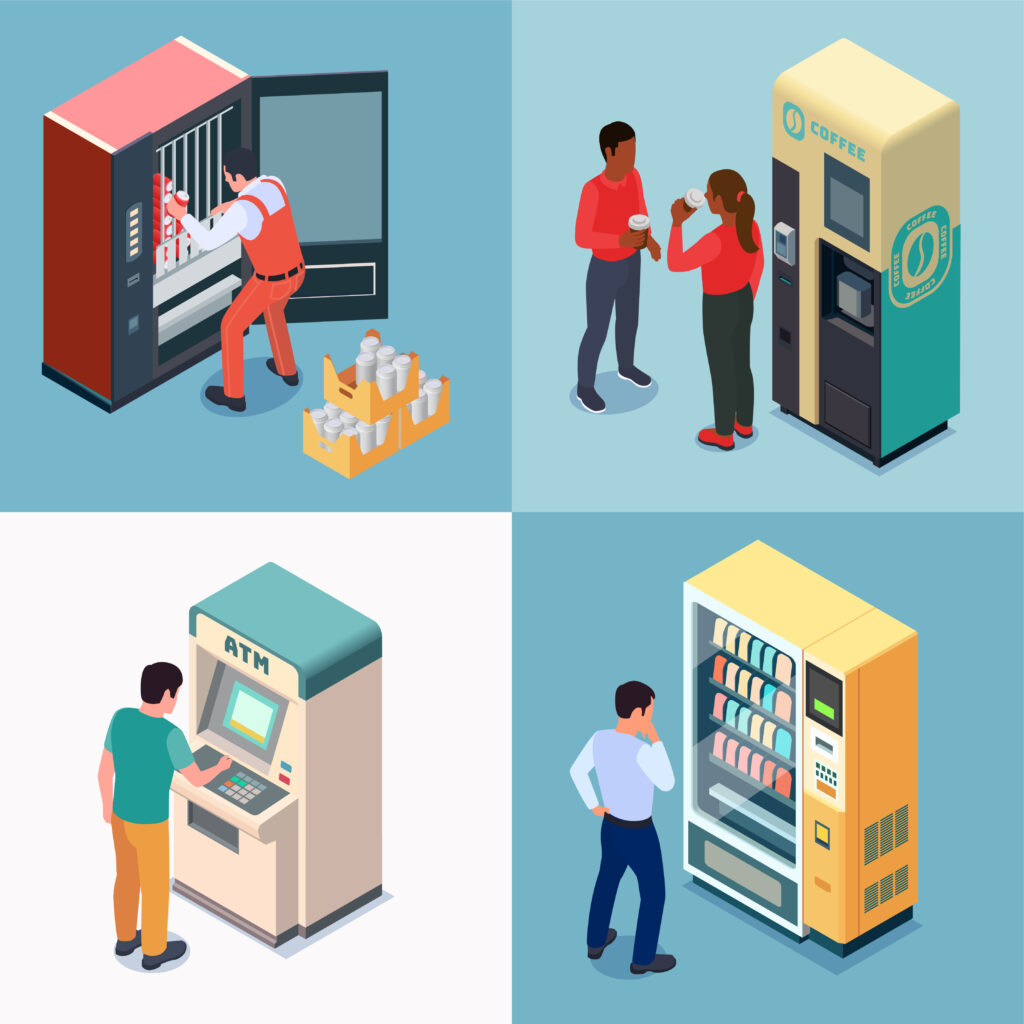
What is it? By putting a vending machine in a desirable location, you could stand to earn a fair few quid. Think shopping centres, office spaces, train stations and airports. It doesn’t have to be snacks and drinks, either. You could offer up tech and oft-forgotten-about travel essentials, among other items.
After you’ve made the initial investment, it’s just ongoing costs such as restocking, maintenance and possibly rental costs for the machine and/or rental of the space it’ll be sitting in.
Pros:
Simple business model
Can be a relatively passive form of income after your initial investment
Easy to scale
Cons:
Managing maintenance
Risk of theft
Potential food spoilage
How much could I earn? One machine could potentially make £300 profit a month (Swoop Funding)
What do I need? vending machine, a location to run it from, stock
Services to sign up to: The Automatic Vending Association, The Vending People
Further reading: How to start a vending machine business
8. Tutoring

What is it? Tutoring is essentially giving extra teaching to people who need it. It goes without saying that you must have knowledge and experience in the area you want to tutor in.
From there, you can work across groups or specialise in working with certain age groups or educational needs. Can work from anywhere – in your home, in their home, online, in a library, café or anywhere that you can have a tutoring session. You’ll need patience and the ability to communicate concepts simply, are likely to be paid by the hour, and work evenings and weekends.
If you have connections and the confidence to do so, start out on your own. If not, find a tutoring agency.
Superprof tutor, Peter Bolam, who teaches psychology on the platform, gives us some of his insights.
Flexible and rewarding? Sounds like the perfect job. So why don’t more people do it? Well, tutoring sounds easy enough but making it worth your time is not as simple as it may seem.
Some tutors need to see students face to face. For example, if the students are school age, or if they are tutoring a practical discipline. This can be difficult because either the tutor needs to go to the student or the student needs to come to the tutor. Either way, there is a time and cost involved. Thankfully, online/remote tutoring is now so common and easily accessible that more and more students, parents and tutors are seeing this as a perfect opportunity. Quality tutoring support along with the flexible scheduling that remote learning offers enables both tutor and student to benefit.
However, to make tutoring worthwhile, there are a number of considerations:1. You need to put time into improving your online profile. Whilst word of mouth is still powerful, if you are trying to have a national reach (and why wouldn’t you?), then online is the only way forward. This means positive reviews from students and parents. Using a platform like Superprof can significantly help with this.2. You need to not price yourself out of the market. Start with a lower hourly rate to build up your profile, and then later you can charge more (if you are worth it).3. You need to be consistent. I hear too many stories of tutors who just disappear or drop out. Some younger people treat a side hustle as something to just pick up and put down when they want. Tutoring does not work like that; it is a relationship of trust between you and your students and parents.4. You need to be prepared to teach all aspects of a course and be up to date. Do not think that AI will help you here. Why will people pay for your time if they can get the same info from AI? What they are paying you for are your skills, insider knowledge and the capacity to facilitate learning.
However, the biggest barrier is not sticking with it. Building your profile takes time and commitment. Once you are up and running then tutoring can be a well-paid side hustle (or even a full-time job) that you can fit around other commitments, but to make it a reliable source of income, you will need to commit to making it a part of your lifestyle.
Pros:
Can focus on student’s specific strengths and weaknesses
Develop a one-to-one relationships with students
Rewarding when they grasp concepts and pass exams
Cons:
Some tutoring can’t be done online
Will need to update knowledge in line with the current curriculum
Often eats into evenings and weekends
How much could I earn? £26.60 per hour on average (Indeed)
What do I need? Specialist knowledge, patience, strong communication skills, camera (if you’re tutoring online), a DBS check if you’re working with children
Services to sign up to: Local agency, online platform such as Superprof
Further reading: 10 best home-based businesses
9. Babysitting/childminding

What is it? It is, in essence, looking after children. If you have experience raising or looking after children, this could be one for you. Many parents, especially of babies and toddlers, would prefer an experienced adult over someone younger.
Offer to babysit for friends and family members’ kids and advertise on local noticeboards and social media to get started. It might also be helpful to do a trial with unfamiliar children just to see if you’re a good fit with the kids and the parents.
If you want to stand out, get a childcare qualification and a first aid qualification.
Pros:
Can do other work or relax while kids are playing elsewhere or asleep
Rewarding to be part of children’s development
Easier to fit around a full-time job
Cons:
Often childminding during evenings and weekends
Can be emotionally, physically and mentally exhausting
Jobs and income can be inconsistent
How much could I earn? Around £15 an hour (Indeed)
What do I need? Experience with children, patience, energy, ideas for playtime
Services to sign up to: You’ll need to register as a childminder if the children are under eight years old, you look after them in your own home, you’ve got them for more than two hours a day and you’re paid to look after them. However, you won’t need to register if you’re a nanny, a tutor, a babysitter watching the kids between 6pm and 2am or a family friend looking after the kids for fewer than three hours a day
If you’re mostly childminding in other people’s homes, you probably won’t have to worry about it
Further reading: 10 best home-based businesses
10. Pet-sitting

What is it? Pet-sitting, much like babysitting, is great for those who have experience with pets, especially cats and dogs. Build a good reputation and a roster of loyal customers. Can have them at your home if you have special equipment and a large garden.
Figure out how much you can realistically afford to do both in terms of finances and time.
Pros:
It’s flexible and can pay pretty well, peaking during school breaks and other major holiday periods
Can combine with housesitting and extra services such as dog grooming
Opportunity to travel with free accommodation, depending on where demand is
Cons:
Can be restrictive if you don’t have experience looking after dogs or cats
Can be physically and emotionally demanding
Might be less access to work if you live in a sparsely populated area and don’t have a car
How much could I earn? £15 per hour on average (Yoopies)
What do I need? Appropriate equipment for pets, knowledge of caring for different animals
Services to sign up to: Rover, Trusted House Sitters, Cat in a Flat
Further reading: www.narpsuk.co.uk/pet-sitting-calculator
11. Web developer

What is it? This could be setting up a website from scratch or creating a custom theme on a platform like WordPress. You could be developing apps for small businesses, such as a workout programme for a personal trainer or a food diary for a dietitian.
Pros:
As web developing is a specialism, you can charge more
Can work on varied and interesting projects
More flexibility to work your chosen hours
Cons:
Can be competitive
Long hours in front of a screen
High pressure from high client expectation
How much could I earn? £20,000-£40,000 per year (£15-£120 per hour, based on experience – Abacus Technologies)
What do I need? Web development knowledge and experience, computer, reliable internet connection, webcam
Services to sign up to: The Coders Guild, Open Referral UK
Further reading: https://www.ipse.co.uk/advice/how-to-become-a-freelance-web-designer
12. Airbnb

What is it? Rent out your space if you already have a house/room or a set of properties that you could use for Airbnb. This could be for all manner of stays, from holidays to short term or longer-term rentals.
Focus on making your room or property attractive to guests and optimising your listings by writing keyword-optimised descriptions, use beautiful, high-quality images to advertise your property and highlight useful facilities such as WiFi speed and cooking facilities.
You could even be a cleaner for an Airbnb by teaming up with an existing Airbnb host and offering your services.
Finally, there’s Airbnb Experiences – offer an authentic local walking tour or cooking class to tourists.
Pros:
Opportunity to meet interesting people from around the world
Earn more than other side hustles, especially if you’re renting out full properties
Less marketing needed than if you were advertising independently
Cons:
Hospitality is a lot of work
Potential property damage, theft and complaints from neighbours
May need to review home insurance
How much could I earn? £5,500-£6,000 per year from a spare room; £30,000-£77,000 per year from a property (Airbnb newsroom, 2024)
What equipment do I need? Spare room/property, cleaner/cleaning products, energy
Services to sign up to: Airbnb (obvs), Airbnb software partners, Airbnb Experiences
Further reading: www.airbnb.co.uk/host/homes
13. Taxi/Uber driver

What is it? Driving a cab, whether it be for a local firm or a platform such as Uber. Though you’ll have a sat nav with you, it’s helpful to have a good sense of the local towns. Have a chat with your car insurer to see how your payments will be affected.
Pros:
Flexible, can take on higher-demand time periods (e.g. Friday and Saturday night) for more money
A lot of variety between locations and passengers
It’s a very social job, with the chance to meet interesting people
Cons:
Potentially restrictive Ts and Cs
Operational costs quickly stack up
Potential damage to your car
How much could I earn? According to Inshur, Uber drivers who do 15-20 hour weeks will earn £1,200-£1,500 per month
What do I need? Car, smartphone, sat nav
Services to sign up to: Your local taxi firm, Uber, lyft, Bolt
Further reading: How to start a taxi business
14. Upholster and sell furniture

What is it? An upholstery business will do furniture repairs or take old furniture, restore it and sell it on. . Can brush up your skills with an online course. Listing on apps like Gumtree and Etsy. Learn how to work with more niche items, such as headboards. Look to local markets and auctions for cheap furniture that you can do up and sell on.
Pros:
Creative fulfilment
You can charge more for niche upholstering such as boat furniture
Lower start-up costs
Cons:
Time and labour intensive
Takes a long time to build a customer base and reputation
Can easily be undercut by cheap furniture sellers
How much could I earn? You could earn £40 for upholstering a dining chair, right up to £1,000 for a three seater sofa (Checkatrade)
What do I need? Good-quality sewing machine, basic tools such as fabric scissors, work bench, staple gun, fabric
Services to sign up to: Association of Master Upholsterers and Soft Furnishers
Further reading: 10 best home-based businesses
15. Rent out parking space/driveway

What is it? Renting out your driveway or parking space is simple and effective – especially if you live near a stadium, city centre or a transport hub. Just make sure that you check with your home insurer before you create an account and start renting out your space.
Pros:
Easy to set up
Low effort to return ratio
Good source of repeat custom for business travellers, football season ticket holders, etc.
Cons:
Potential damage to driveway/parking space
Privacy concerns, especially if it’s your driveway
Need to clear it with insurer
How much could I earn? Up to £13.23 a day (Leasing Options)
What do I need? Driveway, photos, account on driveway sharing platform
Services to sign up to: JustPark, YourParkingSpace
Further reading: http://motoreasy.com/magazine/621/Renting-Out-Your-Driveway-Everything-You-Need-To-Know


