


Innovation often requires a multi-disciplinary approach, as many challenges are too complex to be tackled by a single individual or team. By collaborating with others, team members leverage each other’s strengths and collectively develop more effective solutions. Collaboration also enables team members to build off each other’s ideas, leading to more creative and impactful solutions.
Engagement and collaboration also foster a sense of ownership and commitment to the innovation process. Employee engagement is crucial, as involving all team members leads to the generation and collection of more valuable ideas. When team members feel that their input is valued and they have a stake in the process, they are more likely to be invested in the outcome and motivated to contribute to the project’s success.
While engagement and collaboration are essential for driving innovation, several common pain points can hinder the effectiveness of these practices. Here are a few examples:
Communication breakdowns: Poor communication is a common problem in collaboration, resulting in misunderstandings, missed opportunities, and a lack of alignment.
Limited resources: In some cases, teams may need more resources to collaborate effectively, such as tools, technology, or time. This can result in lower productivity, missed deadlines, and incomplete or suboptimal solutions.
Resistance to change: Resistance to change is a common barrier to innovation. Getting people to embrace new ideas or approaches can be challenging, especially if they are used to a particular way of doing things.
Another challenge organizations face is managing ideas at scale and ensuring that valuable ideas are not lost in the process.
Addressing these pain points is essential to build a culture of innovation and streamlining innovation activities. Effective engagement and collaboration require the right tools that make communication easy and transparent. Below we share ten innovation management software features that enable engagement and collaboration.
What to consider when cultivating engagement and collaboration that drives innovation strategies
Cross-functional teams. Create cross-functional teams that include diverse individuals from different departments, backgrounds, and areas of expertise. This will promote collaboration, support idea generation, and ensure alignment with the organization’s innovation strategy throughout the innovation process.
Effective communication. Establish clear communication channels and make use of tools that streamline communication.
Adequate resources. Ensure that team members have the resources they need to do their job effectively, including time, technology, and tools. Provide support and training as needed to promote skill development and confidence.
Recognition and incentives. Recognize and reward team members for their contributions to the innovation process. This can foster a positive and motivated team culture and promote engagement and collaboration.
Collaborative tools and technology. Utilize collaborative tools and technology to facilitate communication, idea sharing, and project management.
10 innovation software features that enable engagement and collaboration
Innovation management software can be a crucial tool for promoting engagement and collaboration in innovation. These ten features in the ITONICS Innovation OS provide a platform for global teams to share and develop new ideas, collaborate on projects, and manage innovation processes more effectively.
1. Create, categorize, and share innovation knowledge
Innovation management software needs to be able to capture, organize, and systematize content and ideas. Depending on your use case, you need to collect and categorize diverse types of content differently to work with it.
The ITONICS Innovation Management Software provides best-practice templates for several different types of content and ideas, including trends, technologies, competitors, companies, risks, opportunities, ideation campaigns, ideas, and projects (Exhibit 1). This setup serves as the basic building blocks of the system that allow users to further work with their content, organize and structure it so that it can be used across teams, and create a platform for engagement and collaboration.
Exhibit 1: Variety of best-practice templates at ITONICS
2. Comment, communicate, collaborate
Commenting within the software enables decision-focused collaboration directly on the objects being evaluated – whether projects, technologies, or ideas. Rather than discussions happening in email threads or separate tools, feedback occurs where it matters: on the asset itself, creating a transparent audit trail that informs portfolio decisions.
When a subject matter expert flags a technical risk on a project comment or when a regional lead questions market assumptions, these inputs directly influence evaluation scores, status changes, and go/no-go decisions. Advanced commenting functionality in ITONICS (Exhibit 2) allows users to attach supporting documentation, reference related technologies or trends, and mention specific stakeholders whose input is needed for the next decision gate.
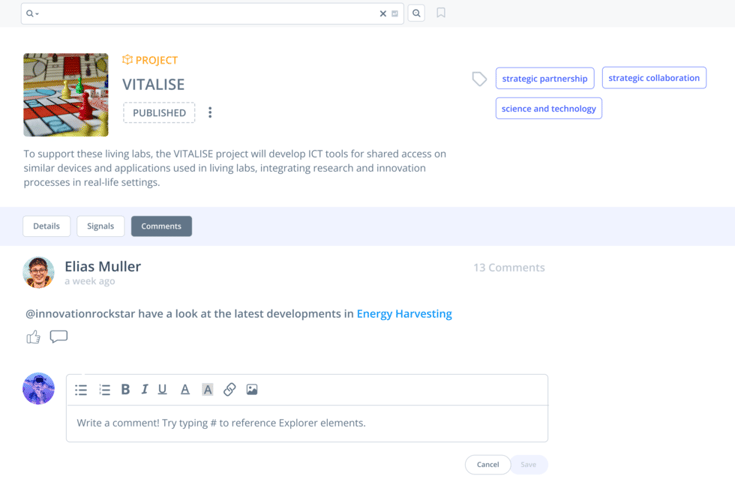
Exhibit 2: Commenting within the software to increase collaboration
This ensures that the collective intelligence shaping an innovation’s trajectory is captured in context, not lost across fragmented channels, and that decision-makers can trace how evaluations evolved based on expert input.
3. Sharing content and allocation attention
Following content in the system acts as a personal relevance filter, directing your attention to developments that matter for your role and responsibilities. Rather than passively receiving updates, following allows innovation managers to actively curate their focus – tracking startups that could become acquisition targets, monitoring technologies critical to roadmap decisions, or watching projects that may create synergies with your portfolio.
This is about ensuring strategic signals reach the right decision-makers before opportunities are missed or risks materialize. Sharing content amplifies important developments across organizational boundaries, enabling cross-functional teams to identify overlaps, prevent redundant efforts, and spot collaboration opportunities that wouldn’t surface through formal reporting structures alone.
4. Make innovation part of your everyday work
Notifications (Exhibit 3) function as an attention management system, surfacing decision-critical updates rather than adding noise. Users receive alerts when actions require their input – when an idea they’re evaluating advances to the next phase gate, when a project they sponsor receives new risk assessments, or when a technology they’re tracking gains strategic relevance.
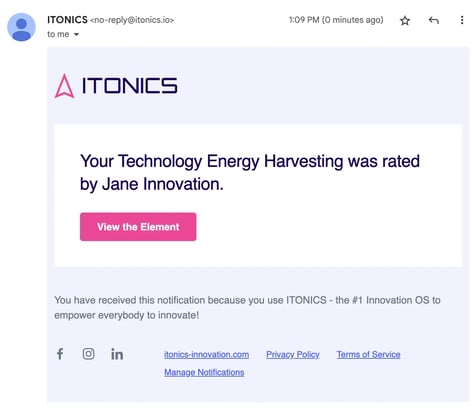
Exhibit 3: Notification about changes in the technology that is followed by the user
Rather than requiring constant platform monitoring, notifications transform the system into a pull-based environment where users engage precisely when their expertise or authority is needed. This minimizes decision latency while preventing alert fatigue, as notifications are triggered by meaningful state changes, not routine activity.
5. Share specific views
Shared views serve as alignment tools that ensure cross-functional teams and management levels operate from a common fact base (Exhibit 3). When configured and saved, these views become reusable artifacts for recurring governance rituals – quarterly portfolio reviews, steering committee meetings, or horizon-balancing sessions.
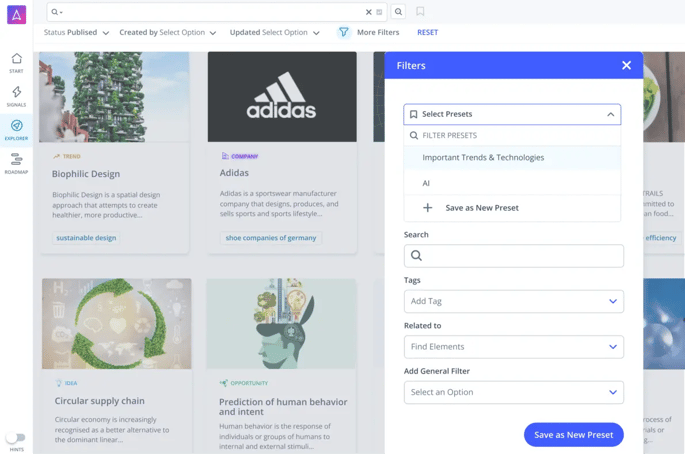
Exhibit 3: Specific views and filtering options configured to specific needs
Rather than stakeholders arriving at meetings with different data cuts, leading to debates about interpretation before discussing decisions, shared views establish a consistent lens on the portfolio. A VP of Innovation can share their portfolio view filtered by Horizon 2 initiatives with regional leads, ensuring everyone evaluates the same projects against the same criteria before resource allocation discussions begin. This reduces miscommunication but at the same time accelerates decision-making by focusing the conversation on strategic choices rather than reconciling conflicting snapshots of reality.
6. Motivate and engage with gamification
Recognition mechanisms make innovation contributions visible across the organization, signaling who is actively shaping the pipeline and rewarding participation in strategic priorities. ITONICS allows users to earn points and badges for meaningful engagement – submitting evaluated ideas, providing expert assessments, or advancing campaigns – with leaderboards displaying contribution patterns (Exhibit 4).
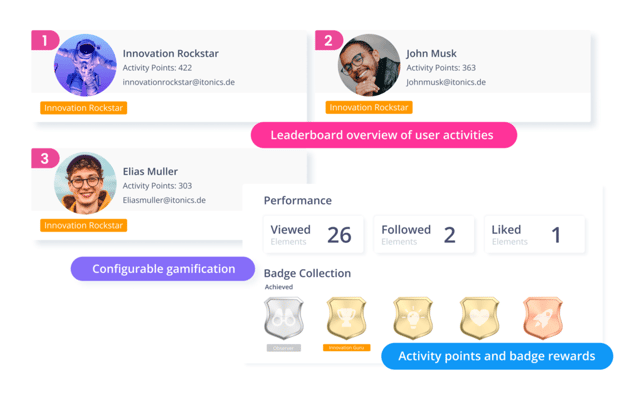
Exhibit 4: Gamification with ITONICS
This creates professional visibility for innovation work that might otherwise go unnoticed, particularly for employees outside core R&D functions. However, gamification must remain optional and context-sensitive as not all cultures respond to competitive dynamics, and recognition should complement intrinsic motivation rather than replace it.
When implemented thoughtfully, these mechanisms help innovation leaders identify engaged contributors, surface hidden expertise, and build a culture where participation in innovation is a valued part of professional identity.
7. Harness the power of the crowd with collaborative ideation
Rather than generating high volumes of unfiltered ideas, structured campaigns channel diverse perspectives toward specific strategic challenges. ITONICS Campaigns (Exhibit 5) enable organizations to pose targeted questions – such as “How can we reduce product carbon footprint by 30%?” or “What adjacent markets should we enter?” – and guide submissions through phase-gate workflows that progressively filter for feasibility, strategic fit, and resource requirements.
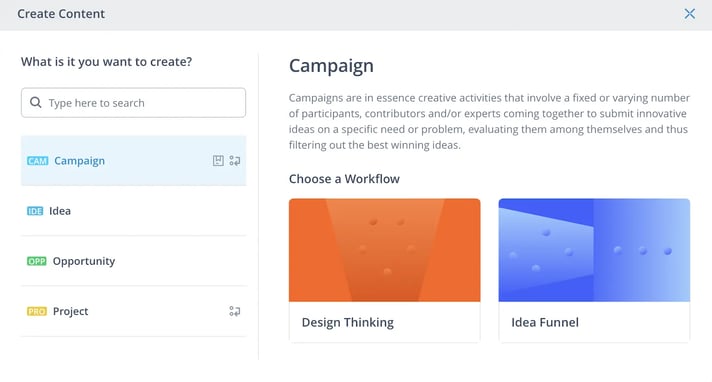
Exhibit 5: ITONICS campaigns to identify ideas to act on
This ensures ideation efforts connect directly to evaluation criteria and portfolio priorities. Expert input can be solicited at each gate, with domain specialists assessing technical viability while business unit leads evaluate market potential.
The progression logic ensures that only concepts meeting defined thresholds advance, preventing weak ideas from consuming evaluation resources while surfacing high-potential innovations that balance the portfolio across horizons. This transforms ideation from a creativity exercise into a strategic sourcing mechanism for the innovation pipeline.
8. Evaluate as decision-scaling infrastructure
Collaborative ratings provide a structured mechanism for assessing opportunities, technologies, and initiatives against consistent criteria, enabling comparability across the portfolio. In ITONICS, users rate assets on dimensions such as business potential, technical feasibility, or strategic alignment – with ratings aggregated from community input or designated experts.
This creates a quantified basis for portfolio decisions: Which Horizon 3 technologies warrant increased investment? Which projects should advance from exploration to development? How do internal initiatives compare to external partnerships?
Ratings enable governance teams to balance portfolios across risk profiles, time horizons, and strategic themes without relying solely on subjective advocacy. Visualizations based on rating data – such as positioning projects in a matrix of impact versus effort – make trade-offs explicit and support evidence-based resource allocation. This scales decision quality by bringing structured judgment to bear on every asset in the pipeline, not just those with executive champions.
Click on any of the technologies on the radar below and see what ratings look like in the card that opens up on the right.
9. Simplify sharing specific insight
The ITONICS Embed feature extends innovation intelligence beyond the core platform, making strategic insights accessible to stakeholders who don’t require full system access. Specific visualizations – like radars tracking emerging technologies, roadmaps showing initiative timelines, or matrices comparing partnership opportunities – can be embedded in corporate intranets, executive dashboards, or partner portals.
This creates transparency that aligns narratives across the organization: when business units view the same technology radar the CTO uses, strategic conversations start from shared understanding. For ecosystem collaboration, embedded views enable external partners, customers, or research institutions to explore relevant findings without platform credentials, facilitating open innovation workflows.
Rather than innovation intelligence remaining siloed within the core team, embedding democratizes access while maintaining governance over what’s shared with whom, ensuring the broader organization and external network operate with a consistent strategic context.
Below, you can try out the Embed feature. Click on any of the technologies, dots on the concentric circles, or any segment on the outline of the radar circle.
10. Strategy and execution alignment
Connecting innovation intelligence to execution requires translating portfolio insights into action. Visualization and export capabilities in ITONICS enable innovation teams to present data in formats suited to different stakeholder contexts. Roadmap software is ideal for executives reviewing portfolio balance in steering committees, project teams tracking initiative progress, or external boards assessing innovation performance.
Radars, matrices, boards, and roadmaps can be exported as PDFs or PNGs for inclusion in strategic planning documents, investment proposals, or board presentations. Direct email functionality from within the system allows innovation managers to push targeted updates to stakeholders, such as notifying program sponsors when a Horizon 2 project reaches a key milestone or alerting the executive team to emerging risks flagged during evaluation.
This ensures that the system doesn’t just store innovation data but actively drives alignment between strategic intent and operational execution, with reporting rhythms reinforcing accountability for portfolio outcomes across horizons.
Boost your innovation success with ITONICS
Innovation management software centralizes innovation intelligence and activities. A single point of truth streamlines processes and makes it easier for teams to collaborate and share ideas. ITONICS enables end-to-end innovation on one collaborative platform and facilitates open communication by providing a space for employees to share ideas, provide feedback, and collaborate on projects. Thus, it provides one platform that can scale to meet the needs of organizations of all sizes, efficiently managing and analyzing a large volume of ideas. This can help to break down silos and encourage cross-functional collaboration, leading to more innovative solutions.
ITONICS offers a comprehensive range of services, including expert support and resources to help organizations implement and scale their innovation strategies. The platform is designed to be user-friendly and accessible to users with varying levels of technical expertise, ensuring quick adoption and minimal learning curve.
ITONICS helps organizations stay ahead by protecting intellectual property and supporting secure collaboration, ensuring sensitive information and innovation processes remain safe.
Want to learn more about the features and functionalities of the ITONICS Innovation OS? Get started with a free software demo.


